


Orthopedic accessories and rehabilitation devices occupy the critical stretch of road between the operating table and full recovery. Surgery gets the headlines, but it’s the braces, CPM machines, and mobility aids that carry patients across the finish line — quietly, daily, and often for months.
The market reflects that quiet importance. The global orthopedic braces and supports segment alone is projected to reach $5.5 billion by 2026, fueled by aging populations, rising sports injuries, and growing demand for non-surgical treatment options. As part of the Global Orthopedic Devices Market Overview, this guide maps the full product landscape — types, materials, technology, regulation, and what comes next.
🎯 Understanding Orthopedic Accessories
What Orthopedic Accessories Actually Do
Orthopedic accessories comprise a broad category of medical devices designed to support, protect, immobilize, or assist musculoskeletal structures. Five core functions define the category:
- Immobilization: Preventing movement to allow healing
- Stabilization: Providing structural support to weakened joints
- Compression: Reducing swelling and promoting circulation
- Correction: Addressing alignment issues and deformities
- Protection: Shielding injured areas from further damage
Major Categories of Orthopedic Braces and Supports
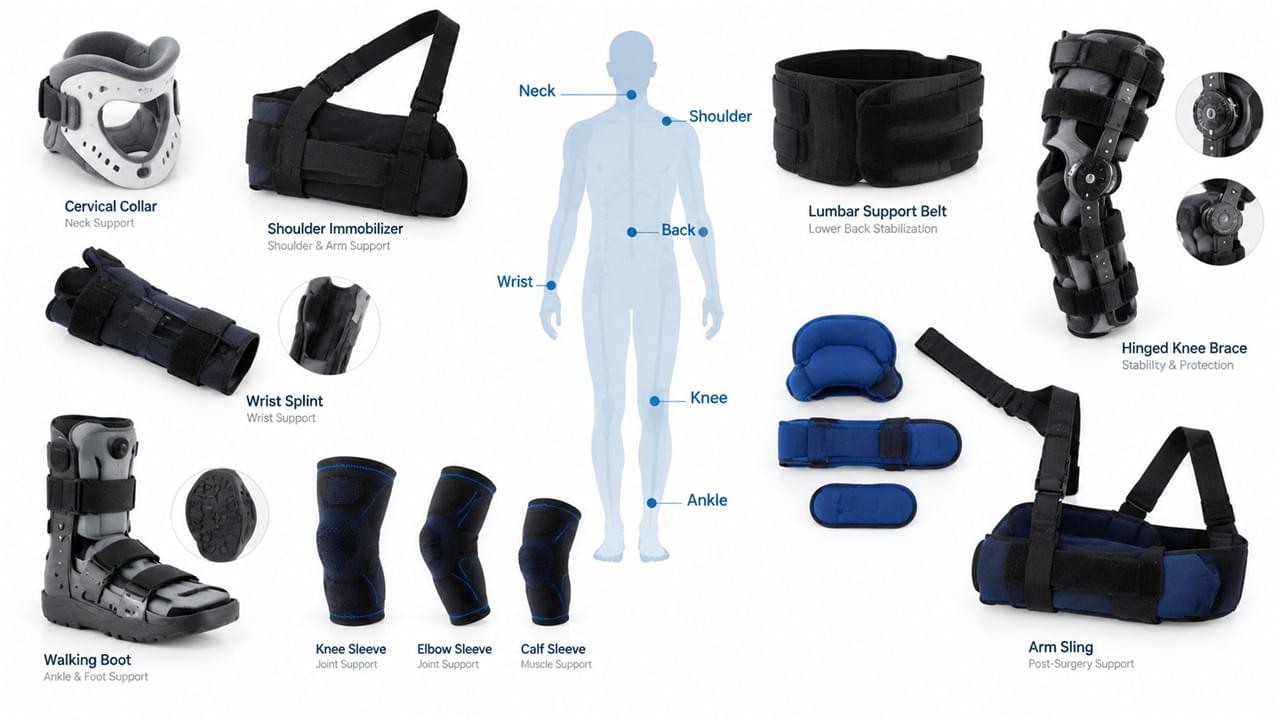
The orthopedic braces and supports family breaks down by anatomy:
Upper Extremity Supports
- Wrist and hand: Carpal tunnel splints, wrist immobilizers, thumb spica splints, finger splints, hand therapy gloves
- Elbow: Tennis elbow straps, immobilizers, compression sleeves, hinged braces
- Shoulder: Immobilizers, rotator cuff braces, clavicle supports, arm slings
Lower Extremity Supports
- Knee: Hinged braces, compression sleeves, patellar stabilizers, ACL/PCL functional braces, unloader braces for osteoarthritis, post-operative immobilizers
- Ankle and foot: Braces and stabilizers, walking boots (CAM walkers), plantar fasciitis night splints, orthotic insoles, toe splints
- Hip and thigh: Abduction braces, compression sleeves, groin supports, trochanter belts
Spinal and Back Supports
- Lumbar support belts, cervical collars, thoracic braces, posture correctors, sacroiliac belts
🏃 Rehabilitation Devices Overview
Types of Rehabilitation Equipment
Modern rehabilitation devices fall into four technology families:
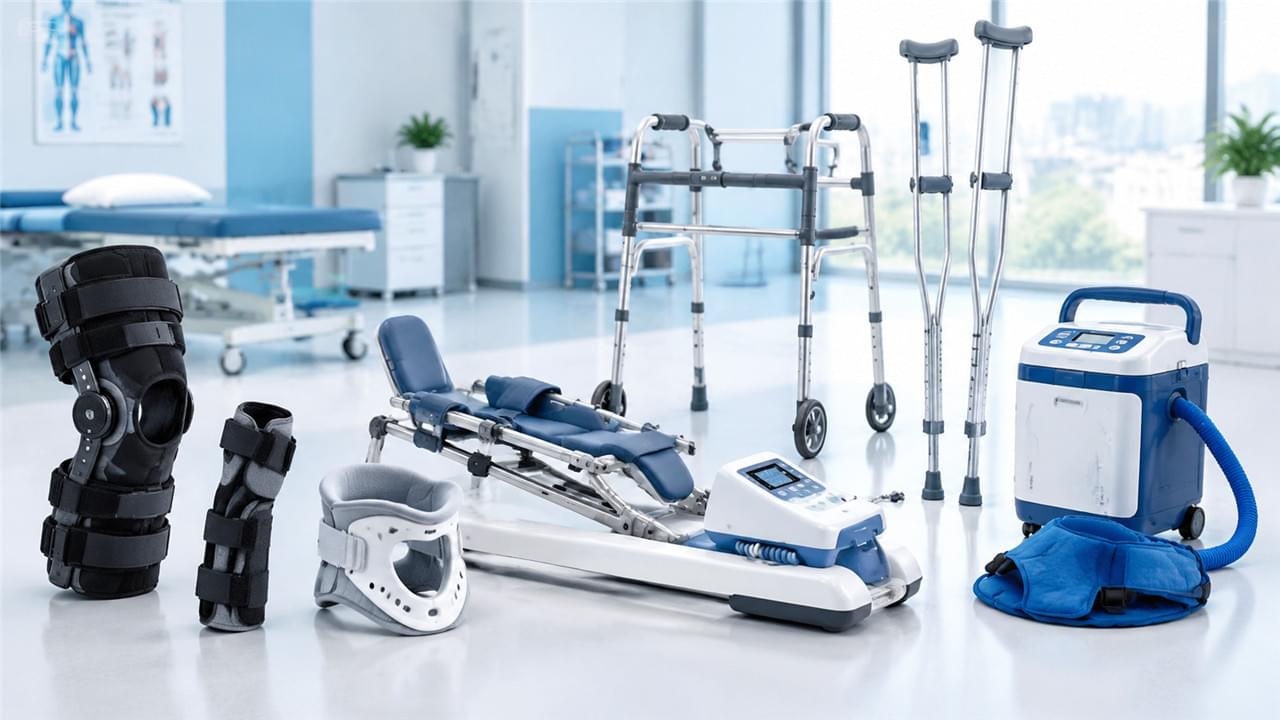
Continuous Passive Motion (CPM) Devices
CPM machines provide controlled, continuous movement to joints following surgery or injury:
- Knee CPM machines: Post-operative recovery following total knee replacement
- Shoulder CPM devices: Rehabilitation after rotator cuff repair
- Ankle CPM systems: Recovery from Achilles tendon surgery
- Hand and wrist CPM: Post-traumatic or post-surgical rehabilitation
Benefits include reduced stiffness, improved range of motion, decreased pain, and accelerated healing through enhanced synovial fluid circulation.
Electrical Stimulation Devices
- TENS: Pain management through nerve stimulation — non-invasive, portable, patient-controlled
- NMES: Muscle re-education, atrophy prevention, enhanced circulation
- FES: Restoring functional movement — drop foot correction, hand and arm recovery
Cold and Heat Therapy Systems
- Cryotherapy: Motorized cold therapy units, cryo cuffs, combined cold-and-compression systems — reduced inflammation, pain management, decreased swelling
- Thermotherapy: Moist heat packs, paraffin wax baths, infrared systems — increased blood flow, muscle relaxation, pain relief
Ultrasound and Laser Therapy
- Therapeutic ultrasound: Deep tissue heating, enhanced tissue extensibility, accelerated healing
- Low-Level Laser Therapy (LLLT): Photobiomodulation for tissue repair, pain reduction, inflammation management
Mobility Aids: From Crutches to Power Wheelchairs
Mobility aids restore independence during the hardest weeks of recovery:
Walking Aids
- Crutches: Axillary, forearm (Lofstrand), platform — plus proper fitting guidelines
- Walkers: Standard, two-wheeled, four-wheeled rollators, bariatric models
- Canes: Single-point, quad canes, folding and adjustable options, height adjustment techniques
Wheelchairs and Seating Systems
- Manual: Standard, lightweight, sport, tilt-in-space models
- Power: Front-, mid-, and rear-wheel drive, standing wheelchairs
- Specialized seating: Pressure relief cushions, custom contoured seating, postural support systems
🧪 Materials and Manufacturing
Materials That Make Modern Orthopedic Accessories Work
Textile Materials
- Neoprene: Excellent compression, thermal retention, flexibility — knee sleeves, back supports, ankle braces
- Elastic fabrics: Four-way stretch, breathable mesh, graduated compression — compression garments and sleeves
- Nylon/polyester blends: Moisture-wicking, durable, lightweight — athletic supports and everyday braces
Structural Materials
- Aluminum alloys: Lightweight, corrosion-resistant, easy to customize — hinged braces, walker frames
- Carbon fiber: High strength-to-weight ratio, radiolucent, rigid with minimal bulk — advanced braces, prosthetic components
- Thermoplastics: Moldable when heated, rigid when cooled — custom splints and orthotics
- Stainless steel: Exceptional durability and load-bearing — hinges and structural components
Manufacturing Processes
Mass Production Techniques
- Injection molding: High-volume plastic components with consistent quality
- Compression molding: Rubber, silicone, foam padding, textile lamination
- Die cutting and sewing: Fabric components, brace assembly, custom sizing
Custom Fabrication Methods
- CAD/CAM: Digital design, precision manufacturing, patient-specific customization
- 3D printing: Rapid prototyping, custom orthotics, complex lattice cushioning structures
- Thermoforming: Custom splint creation and patient-specific fitting
🏥 Clinical Applications and Patient Populations
Post-Surgical Rehabilitation
Orthopedic accessories play a crucial role in post-operative care across surgical categories:
Joint Replacement Surgery
- Continuous passive motion devices, compression garments for swelling management, mobility aids during recovery phases, protective braces during healing
Sports Medicine Procedures
- ACL reconstruction rehabilitation, rotator cuff repair support, meniscus repair protection, tendon repair immobilization
Spinal Surgery
- Cervical collars for fusion procedures, lumbar braces for stabilization, postural support during recovery
These devices rarely work alone — they complete the care pathway that begins with orthopedic implants, external fixators, surgical power tools, and orthopedic instrument sets. Recovery is a team effort; accessories are the home team.
Chronic Condition Management
Osteoarthritis Support
- Knee unloader braces: Redistribute weight away from damaged compartments
- Thumb CMC braces: Support basal joint arthritis
- Back supports: Reduce spinal loading and pain
- Night splints: Maintain joint position, reduce morning stiffness
Neurological Conditions
- Drop foot braces: FES systems or ankle-foot orthoses
- Wrist and hand splints: Positioning for stroke recovery
- Postural supports: Scoliosis bracing and seating systems
Pediatric Applications
- Clubfoot correction: Ponseti method bracing
- Scoliosis bracing: Boston brace, Charleston bending brace
- Cranial remolding helmets: Plagiocephaly correction
- Gait trainers: Mobility assistance for developmental delays
Sports and Athletic Use
Injury Prevention
- Prophylactic knee bracing for high-risk sports
- Ankle taping and bracing — basketball, soccer, volleyball
- Shoulder supports for overhead throwing athletes
- Compression garments for muscle support and recovery
Performance Enhancement
- Patellar straps for jumpers’ knee, IT band supports for runners
- Posture correctors for alignment optimization
- Recovery compression for post-exercise circulation
🤖 Technological Innovations
Smart Orthopedic Devices
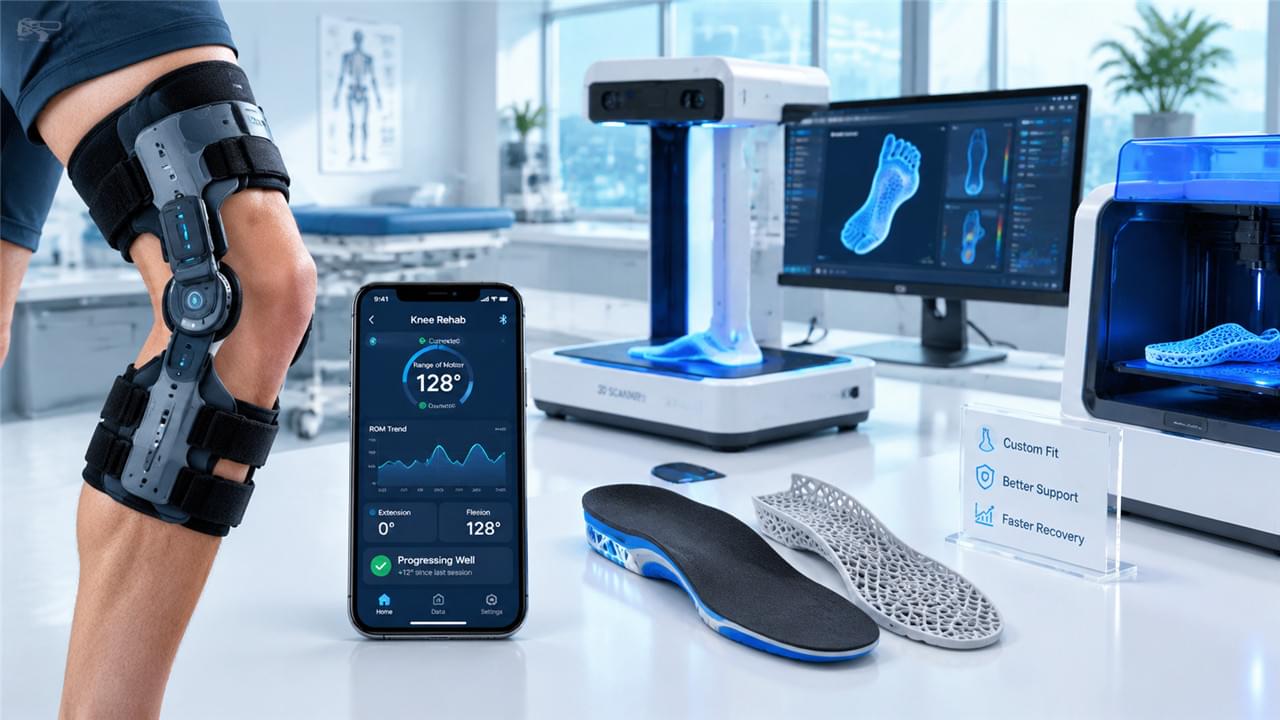
Sensor-Integrated Braces
Modern orthopedic accessories increasingly incorporate sensor technology:
- Activity monitoring: Track movement patterns and compliance
- Range of motion measurement: Objective progress assessment
- Pressure sensing: Optimize fit and pressure distribution
- Temperature monitoring: Detect inflammation or infection
Connected Rehabilitation Systems
- App-integrated devices for patient engagement and remote monitoring
- Telemedicine compatibility for remote therapist assessment
- Gamified rehabilitation with interactive exercise programs
- Data analytics for treatment optimization and outcome prediction
Advanced Manufacturing Technologies
3D Printing Revolution
- Customized production: Patient-specific anatomical matching, complex internal structures, rapid prototyping, reduced inventory
- Materials innovation: Flexible TPU printing, multi-material cushioning, biocompatible extended-wear materials
Artificial Intelligence Applications
- Predictive fitting with AI-powered sizing recommendations
- Machine learning for treatment protocol selection
- Data-driven outcome prediction and rehabilitation planning
Emerging Technologies
Exoskeleton Systems
- Medical exoskeletons for gait training after spinal cord injury
- Rehabilitation exoskeletons for assisted movement therapy
- Soft exosuits and powered bionic braces for lightweight assistance
Virtual Reality Rehabilitation
- Immersive therapy environments and biofeedback integration
- Remote home-based rehabilitation with professional oversight
- Cognitive-motor training combining physical and cognitive exercise
📜 Regulatory Considerations
Regulatory Pathways for Orthopedic Accessories
FDA Classification (United States)
Per the FDA’s medical device classification framework:
- Class I: Lowest risk, general controls only — crutches, canes, simple braces
- Class II: Moderate risk, special controls, typically 510(k) clearance — powered rehabilitation devices, CPM machines
- Class III: Highest risk, premarket approval (PMA) — some implantable devices
European CE Marking
- MDR (Medical Device Regulation) compliance
- Risk-based classification, technical documentation, post-market surveillance obligations
Quality Standards
- ISO 13485: Medical device quality management systems, design controls, risk management — see the ISO standards catalog
- ISO 10993: Biological evaluation and biocompatibility testing
- ASTM standards: Testing methods, performance requirements, durability and safety testing
📈 Market Trends and Future Outlook
Market Growth Drivers
- Aging population: Increased prevalence of orthopedic conditions
- Sports participation growth: Rising injury rates and prevention awareness
- Minimally invasive surgery trends: Earlier mobilization requiring support devices
- Home healthcare expansion: Shift toward outpatient rehabilitation
- Technological advancement: Smart devices and connected health solutions
Regional Market Dynamics
- North America: Largest market share, high healthcare expenditure, early technology adoption, strong reimbursement frameworks
- Europe: Mature market with strict regulation, aging demographics, emphasis on cost-effective solutions, growing homecare segment
- Asia-Pacific: Fastest-growing region, expanding healthcare infrastructure, rising middle-class spending, expanding manufacturing capabilities
Future Developments
Personalized Medicine Integration
- Genetic profiling for customized rehabilitation protocols
- Biomarker monitoring for objective healing assessment
- Precision fitting through advanced scanning and manufacturing
Sustainability Initiatives
- Eco-friendly, biodegradable and recycled materials
- Reusable designs reducing medical waste
- Energy-efficient manufacturing with lower carbon footprint
Healthcare System Integration
- Value-based care and outcome-focused device selection
- Bundled payments driving comprehensive rehabilitation solutions
- Population health management through preventive device utilization
📏 How to Choose Orthopedic Accessories: Selection and Fitting
Professional Assessment
Proper selection of orthopedic accessories requires:
- Clinical evaluation: Diagnosis and treatment goals
- Functional assessment: Activity level and mobility needs
- Anatomical measurement: Proper sizing and fit
- Patient factors: Compliance ability and lifestyle considerations
The AAOS provides clinician guidance on bracing and orthotic selection across musculoskeletal conditions.
Fitting Best Practices
- Follow manufacturer guidelines: Proper application techniques
- Patient education: Usage instructions and care
- Regular reassessment: Fit verification and adjustment
- Compliance monitoring: Adherence to wearing schedules
- Skin integrity checks: Prevent pressure-related complications
❓ FAQ: Orthopedic Accessories in Everyday Use
Q1: How long should I wear my orthopedic brace each day?
Wearing time depends on your specific condition and treatment protocol. Some braces are designed for continuous wear, while others are intended for specific activities only. Always follow your healthcare provider’s instructions — improper use can either delay healing or cause additional complications.
Q2: Can I clean my orthopedic brace at home?
Most orthopedic accessories can be cleaned at home following manufacturer guidelines. Typically, hand washing with mild soap and air drying is recommended. Avoid harsh chemicals, high heat, or machine washing unless specifically indicated. Regular cleaning prevents skin irritation and extends device lifespan.
Q3: What’s the difference between a brace and a splint?
Braces are generally more structured, often with hinges or rigid components, designed for longer-term use and specific functional support. Splints are typically used for immobilization, often in the immediate post-injury or post-surgical period, and may be static or removable depending on the treatment phase.
Q4: How do I know if my orthopedic device fits properly?
A properly fitting device should be snug but not painful, provide the intended support without restricting necessary movement, not cause skin irritation or pressure points, and stay in position during normal activities. If you experience numbness, tingling, increased pain, or skin changes, contact your healthcare provider immediately.
Q5: Will insurance cover my orthopedic accessories?
Coverage varies by insurance plan, medical necessity, and device type. Most insurance plans cover medically necessary orthopedic devices prescribed by a healthcare provider. Durable medical equipment (DME) coverage typically requires documentation of medical necessity and may have specific supplier requirements.
Q6: Can I participate in sports while wearing an orthopedic brace?
Many orthopedic braces are specifically designed for athletic use and can allow safe participation in sports. However, this depends on your specific injury, the type of brace, and your healthcare provider’s recommendations. Some braces are designed for prophylactic use in high-risk sports.
🏁 Conclusion
Orthopedic accessories and rehabilitation devices are the connective tissue of musculoskeletal care — spanning seven product families from simple splints to AI-powered exoskeletons. For manufacturers, the opportunity lies in smart, sustainable, patient-specific design; for clinicians and buyers, in matching the right device to the right patient at the right phase of recovery. Either way, the finish line of every successful orthopedic treatment runs straight through this category.
Explore the rest of the series: Global Orthopedic Devices Market · Orthopedic Implants · External Fixators · Surgical Power Tools · Orthopedic Instrument Sets.
Medical Disclaimer
The information provided in this article is for educational purposes only and does not constitute medical advice. Orthopedic accessories and rehabilitation devices should only be used under the guidance of qualified healthcare professionals. Always consult with your physician, physical therapist, or orthopedic specialist before using any medical device. Individual needs vary, and professional assessment is essential for proper device selection and fitting.
 English
 Arabic
 French
 German
 Italian
 Japanese
 Korean
 Portuguese
 Turkish
 Russian
 Spanish