


Orthopedic power tool torque, speed, vibration, and thermal management are the four dimensions that decide whether a surgical power tool is clinically safe and effective. For manufacturers, they set the design targets. For procurement teams, they’re the only honest basis for comparing one spec sheet against another.
Get these numbers wrong and the consequences show up in the OR — stalled reamers, cooked bone, tired hands. Get them right and the tool disappears into the surgeon’s workflow. This article is part of: Orthopedic Surgical Power Tools: Technology, Selection & Maintenance.
🎯 Torque: The Primary Performance Metric
Orthopedic power tool torque is the rotational force the motor delivers to the cutting element. In plain terms, it determines whether the tool powers through dense cortical bone or embarrassingly stalls halfway through the cut. It’s the spec every buyer asks about first — for good reason.
Key Orthopedic Power Tool Torque Specifications
Stall torque: Maximum torque before the motor stops rotating under load — the ceiling of the tool’s cutting capability.
Rated torque at maximum efficiency: The torque delivered at the motor’s optimal operating point (typically 50–70% of stall torque). This is the clinically relevant number — the one that actually shows up in your hands mid-case.
Orthopedic Power Tool Torque by Application
| Application | Required Torque Range |
|---|---|
| K-wire insertion | 0.5–1.5 Nm |
| Small bone drilling (3.2mm) | 0.8–2.0 Nm |
| Large bone drilling (4.5mm+) | 2.0–5.0 Nm |
| Canal reaming | 4.0–8.0 Nm |
| Acetabular reaming | 6.0–15.0 Nm |
| Bone screw driving | 1.0–4.0 Nm (torque-limited) |
Treat these orthopedic power tool torque ranges as engineering starting points — the right rating for a given system depends on bit geometry, bone quality, and how aggressively the surgeon works.
Why Orthopedic Power Tool Torque Consistency Matters
Torque fluctuation mid-procedure isn’t a minor annoyance — it causes:
- Irregular bone cuts or drill holes
- Unexpected breakthrough at cortex penetration
- Loss of tactile feedback for the surgeon
- Potential tissue injury
Modern battery management and motor controller systems hold torque output steady throughout the charge cycle — a genuine selling point for premium battery systems. When evaluating a demo unit, ask specifically how the controller regulates orthopedic power tool torque as the battery drains, because that’s where cheap systems fall apart.
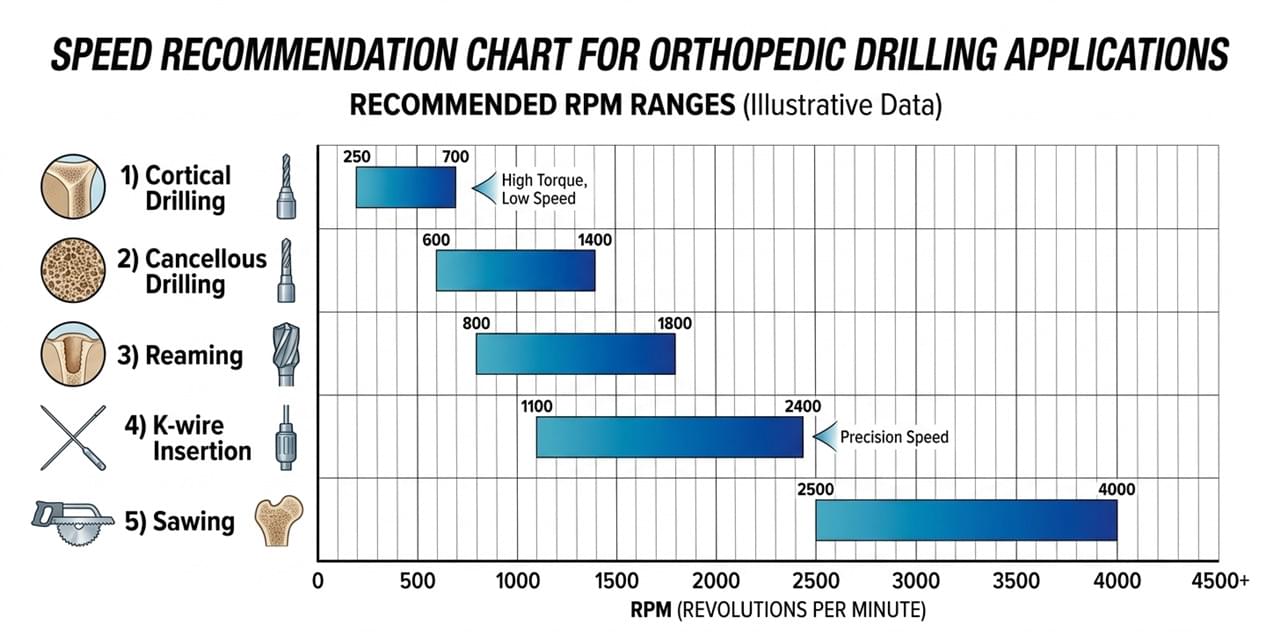
⚡ Speed (RPM): Matching Speed to Application
Surgical drill speed has to match bone density, drill diameter, and the job at hand:
Too fast:
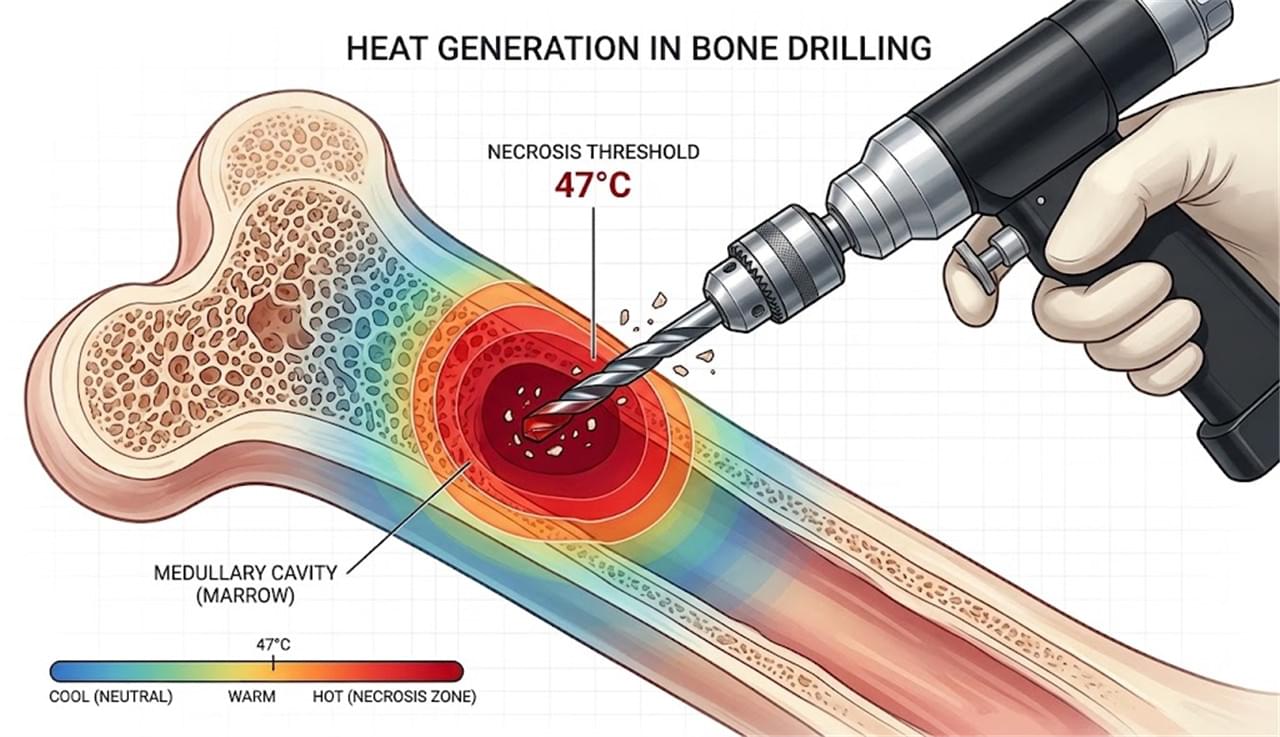
- Thermal necrosis of osteocytes (>47°C for 1 minute is the critical threshold)
- Excessive vibration
- Accelerated blade/bit wear
Too slow:
- Excessive force required from the surgeon
- Chattering and vibration from insufficient cutting speed
- Prolonged procedure time
Optimal speed ranges:
| Application | Recommended Speed |
|---|---|
| Cortical drilling (3.2mm–4.5mm) | 800–1,500 RPM |
| Cancellous drilling | 1,000–2,000 RPM |
| K-wire insertion | 500–1,200 RPM |
| IM canal reaming (flexible) | 150–250 RPM |
| Acetabular reaming | 200–400 RPM |
| Oscillating saw (TKA cuts) | 10,000–18,000 OPM |
| Sagittal saw | 15,000–20,000 OPM |
Variable speed control is standard in premium systems — foot pedal or trigger pressure proportionally controls speed, giving surgeons tactile feedback and precise control. If a demo tool jumps straight to full throttle, walk away.
📳 Vibration: Impact on Surgical Precision
Excessive vibration in orthopedic surgical power tools causes:
- Loss of positional accuracy during drilling
- Surgeon fatigue in prolonged procedures
- Abnormal stress on bone at the drill/cut site
Vibration sources:
- Motor imbalance
- Bearing wear
- Blade resonance
- Loose chuck mechanism
Vibration specifications: ISO 28927 (hand-arm vibration of portable power tools) provides the measurement framework. Manufacturers rate vibration acceleration values (m/s²) under standard test conditions — and regulators take this seriously, because long-term hand-arm vibration exposure causes permanent, irreversible disorders (EU-OSHA — Physical agents: hand-arm vibration.
Design mitigation:
- Precision-balanced motor rotors
- Vibration-damped handle materials
- Blade balancing within manufacturing tolerance
- Rubber/polymer vibration isolation mounts
🌡️ Heat Generation and Thermal Control
Bone drill heat generation is perhaps the most clinically significant performance parameter of all. Thermal necrosis begins at 47°C and bone protein denaturation at 56°C — both entirely achievable with a dull bit, aggressive speed, and no irrigation. The classic research on drilling parameters remains the reference point here (Augustin et al., Thermal osteonecrosis and bone drilling parameters revisited.
Balancing Orthopedic Power Tool Torque Against Heat Generation
More torque and speed cut faster — but friction rises with them. The same orthopedic power tool torque that slices through cortical bone also generates heat at the cutting tip, and the engineering challenge is delivering cutting power without cooking the bone:
Factors increasing heat:
- Drill speed (higher = more heat per unit time)
- Dull/worn drill bits (more friction)
- Dense cortical bone (more friction)
- Insufficient irrigation
- Continuous vs. intermittent drilling
Manufacturer design responses:
- Through-hole irrigation systems (coolant delivered through a hollow drill shaft directly to the cutting tip)
- Optimized drill bit geometry for heat dissipation
- Saw blade coatings (TiN-coated blades reduce friction)
- Speed-governing systems that prevent thermal overclock
Clinical protocol:
- Continuous saline irrigation at the drilling site
- Intermittent drilling (peck drilling) in dense cortical bone
- Sharp bit replacement protocols — most programs recommend discarding bits after 20–50 uses
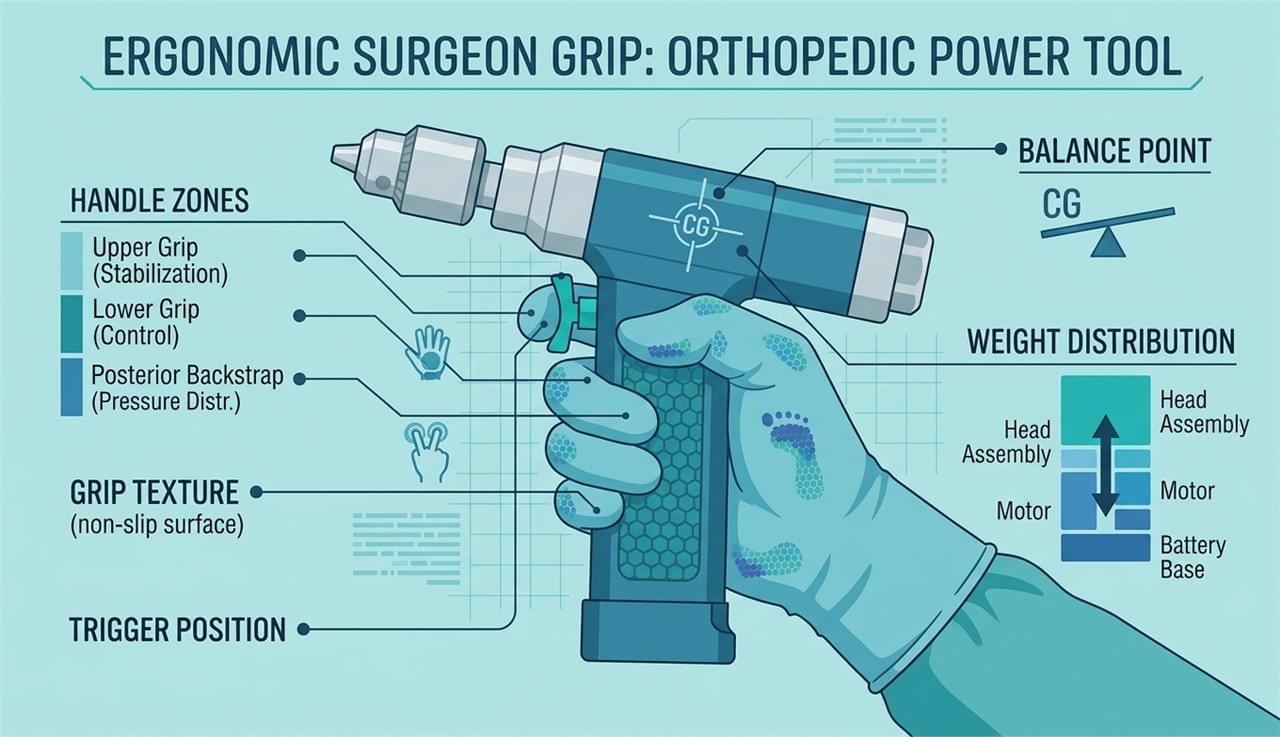
🖐️ Surgeon Preference Factors
Beyond the objective orthopedic tool performance specs, surgeon preference heavily influences which tools actually get adopted:
Ergonomics:
- Handle grip geometry and texture
- Tool balance (proximal vs. distal weight distribution)
- Trigger placement and throw
- Overall tool length and diameter
Tactile feedback:
- Sensation of cortex penetration (the “fall-through” feel)
- Speed response to trigger input
Noise and vibration perception:
- Quieter tools reduce OR noise and perceived fatigue
Manufacturers investing in human factors engineering (HFE) studies and real surgeon feedback loops consistently win adoption. The numbers get a tool shortlisted; the feel gets it purchased.
❓ FAQ: Orthopedic Power Tool Performance
Q1: What is the typical stall torque for an orthopedic surgical drill?
Typical orthopedic power tool torque ratings run 3–8 Nm stall torque for trauma/arthroplasty applications, and up to 15–20 Nm for high-torque reaming systems.
Q2: How do I prevent bone drill thermal necrosis?
Use sharp, appropriately-sized drill bits. Maintain recommended surgical drill speed (800–1,500 RPM for cortical bone). Apply continuous saline irrigation. Use peck drilling (advance, retract, re-advance) in dense bone.
Q3: What does “oscillation angle” mean for oscillating saws?
Oscillation angle is the arc the blade travels in each back-and-forth cycle, typically 2–6°. Smaller angles give finer control; larger angles remove material faster.
Q4: How is surgeon vibration exposure regulated?
EU Directive 2002/44/EC sets occupational exposure limits for hand-arm vibration, and ISO 28927 provides the measurement standards for surgical power tools. Manufacturers must publish vibration emission values in product documentation — ask for them.
Q5: How should cutting speed be set for acetabular reaming?
200–400 RPM is the standard range. Speed drops for the final 1–2 sizes to ensure precise fit without thermal injury. Most surgeons run the lowest speed that still removes bone adequately with acceptable tactile feedback.
🏁 Conclusion
Orthopedic power tool torque, speed control, vibration management, and thermal discipline collectively define whether a surgical power tool is clinically superior. For manufacturers, optimizing these parameters against real clinical requirements is the core engineering challenge. For procurement teams, these specifications are what turn a glossy brochure into a meaningful product comparison.
Return to: Orthopedic Surgical Power Tools.
Medical Disclaimer
Informational content for industry professionals. All device specifications must be verified against current manufacturer documentation.

 English
 Arabic
 French
 German
 Italian
 Japanese
 Korean
 Portuguese
 Turkish
 Russian
 Spanish