


Continuous Passive Motion — CPM for short — is one of those quiet workhorses of post-surgical rehabilitation. A motorized cradle moves your joint through a controlled range of motion, hour after hour, while your muscles stay completely relaxed. No effort, no guarding, no wincing through a stretch. CPM machines do the moving for you.
The concept dates back to the 1970s, when Dr. Robert Salter showed that joints heal better when they keep moving gently instead of freezing up in a cast. What started as a simple mechanical rig has evolved into computerized systems with precise speed, range, and duration control — and today CPM therapy is standard equipment in orthopedic recovery protocols worldwide.
This guide covers how continuous passive motion actually works, the five device families, real treatment protocols, and — importantly — what the evidence says and doesn’t say. For context on where these devices fit in the bigger picture, start with our orthopedic accessories and rehabilitation devices guide.
🔄 Understanding CPM Therapy
What Continuous Passive Motion Therapy Actually Means
The name says it all: continuous, passive, motion. The machine cycles a joint through a preset arc repeatedly — typically for hours — without any muscle contraction from the patient. Four principles define the approach:
- Passive movement: no active muscle effort required
- Continuous operation: hours of uninterrupted motion
- Controlled parameters: precise speed, range, and duration settings
- Gradual progression: settings advance as healing allows
How CPM Machines Promote Healing
The physiology is genuinely elegant. Movement pumps synovial fluid through the joint — cartilage has no blood supply, so this circulation is how it gets fed. CPM also prevents the stiffness that immobilization causes, promotes fluid movement that reduces edema, and modulates pain through gate control theory. On the cellular level: chondrocyte metabolism improves, collagen fibers align along lines of stress, inflammation drops, and tissue healing accelerates.
In plain terms: motion is lotion. Keep the joint moving safely, and it heals better than one locked in place.
🦵 The Five Types of CPM Machines
Knee CPM Machines: The Most Prescribed Device
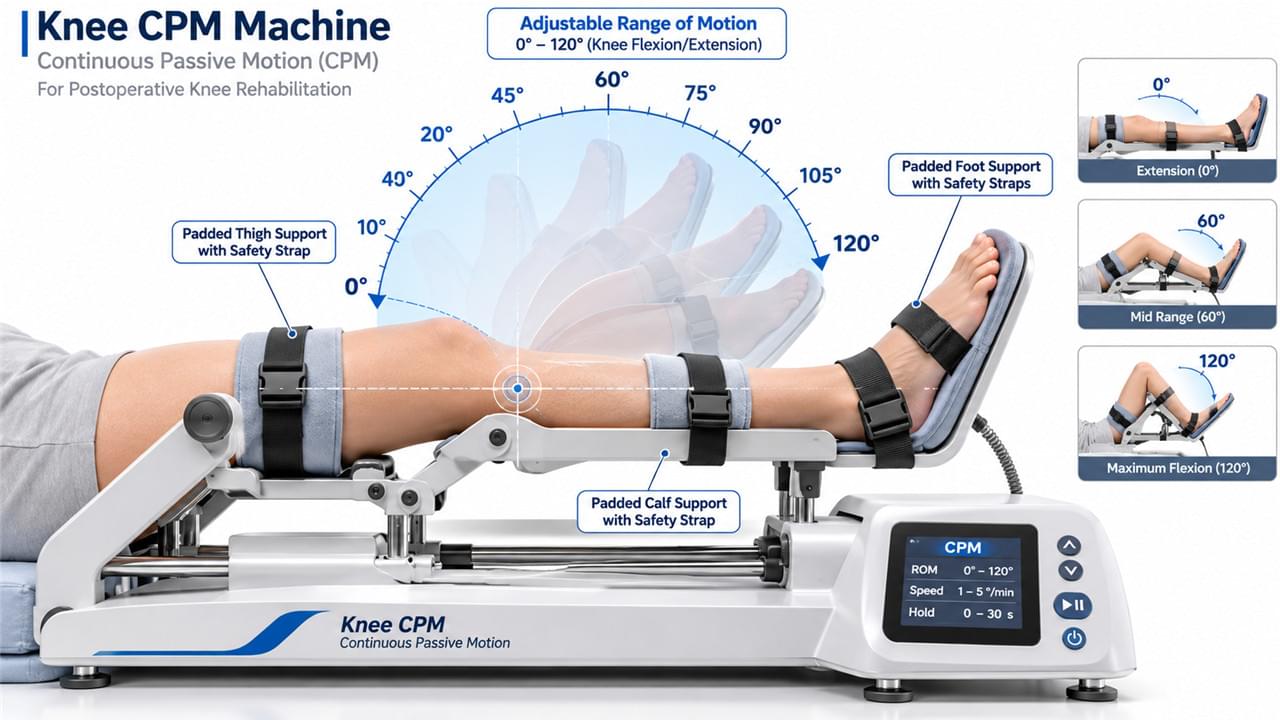
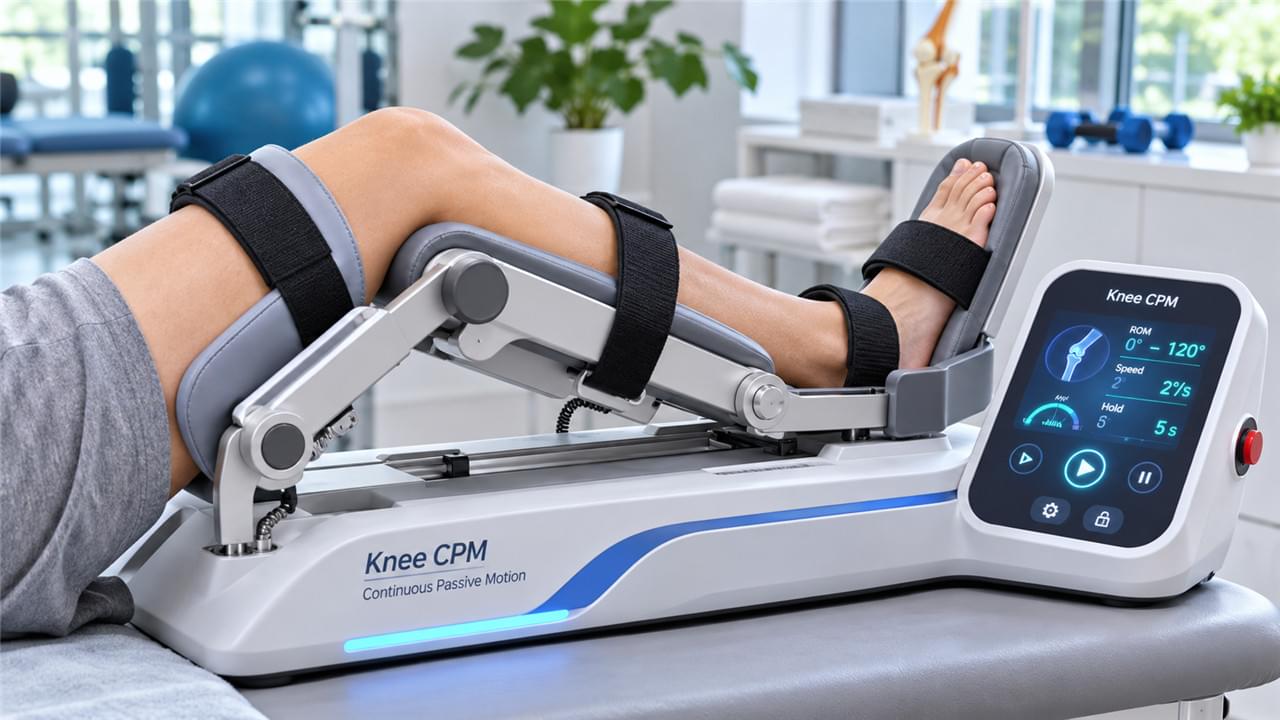
Ask any equipment rental company what moves out the door most, and it’s the knee CPM machine. These devices adjust through 0–120 degrees of motion, with variable speed, pause-and-reverse settings, patient safety controls, and compact designs for home use.
Typical indications: total knee replacement, ACL reconstruction, meniscus repair, patellar realignment, and articular cartilage procedures.
Common models in the field: Chattanooga OptiFlex, Breg Flex, Kinetec Spectra, and Sammons Preston CPM. If you’re recovering alongside bracing, our knee braces guide covers the supportive hardware that pairs with early motion protocols.
Shoulder CPM Machines: Handling Complex Motion
The shoulder doesn’t move in one plane, so these devices don’t either. They handle flexion and extension, abduction and adduction, internal and external rotation — and combined patterns — with adjustable arm positioning, multiple axis control, and supine or seated operation.
Indications include rotator cuff repair, shoulder replacement, capsular release, fracture fixation, and Bankart repair.
Ankle and Foot CPM
Compact devices cycling the ankle through dorsiflexion and plantarflexion, inversion and eversion, and combined circumduction. Used after Achilles tendon repair, ankle fractures, total ankle replacement, and soft tissue procedures.
Hand and Wrist CPM
Precision instruments for small joints — individual digit control, wrist flexion/extension, and fine range adjustments. These earn their keep in tendon repairs, joint replacement, fracture recovery, and arthritis management, where millimeters of motion matter.
Hip CPM Machines
Less common, but valuable after hip arthroscopy and labral repair, with limited use in total hip replacement and fracture recovery.
🏥 Clinical Applications Across Post-Surgical Rehabilitation
Post-Surgical Protocols
Total knee replacement: CPM typically starts within 24 hours of surgery, running 6–8 hours daily for a 2–3 week course, with range progressing as tolerated.
ACL reconstruction: early motion protects the healing graft, usually combined with bracing protocols over 2–4 weeks.
Rotator cuff repair: protected motion in a limited arc initially, expanding gradually over a 4–6 week treatment period.
Trauma and Fracture Management
Intra-articular fractures benefit enormously from early motion — cartilage health depends on it — with protocols tailored to fixation stability. Soft tissue injuries like tendon repairs use controlled stress application to support ligament healing without overstressing the repair.
Chronic Conditions
For osteoarthritis, CPM manages symptoms, maintains range of motion, and conditions the joint before surgery. For joint contractures, it delivers progressive stretching as an alternative to serial casting, supporting long-term management.
📋 Treatment Protocols: Setup to Progression
Initial Setup and Parameter Settings
Setup is where outcomes are won. Patient positioning must be correct — proper alignment, comfort and support, safety straps applied, and controls within the patient’s reach. Then the parameters: starting range of motion, speed selection, pause intervals, and daily duration goals. Get these right on day one and the rest of the course flows; get them wrong and you’re fighting pain and poor compliance for weeks.
Progression Guidelines
Range of motion: start with a comfortable arc, increase roughly 10–15 degrees daily as tolerated, let pain set the limits, and document measurements every day.
Speed and duration: begin slow, increase gradually, and build toward the typical 6–8 hours daily — split into multiple sessions if the patient can’t tolerate one long run.
Home vs. Clinical Use
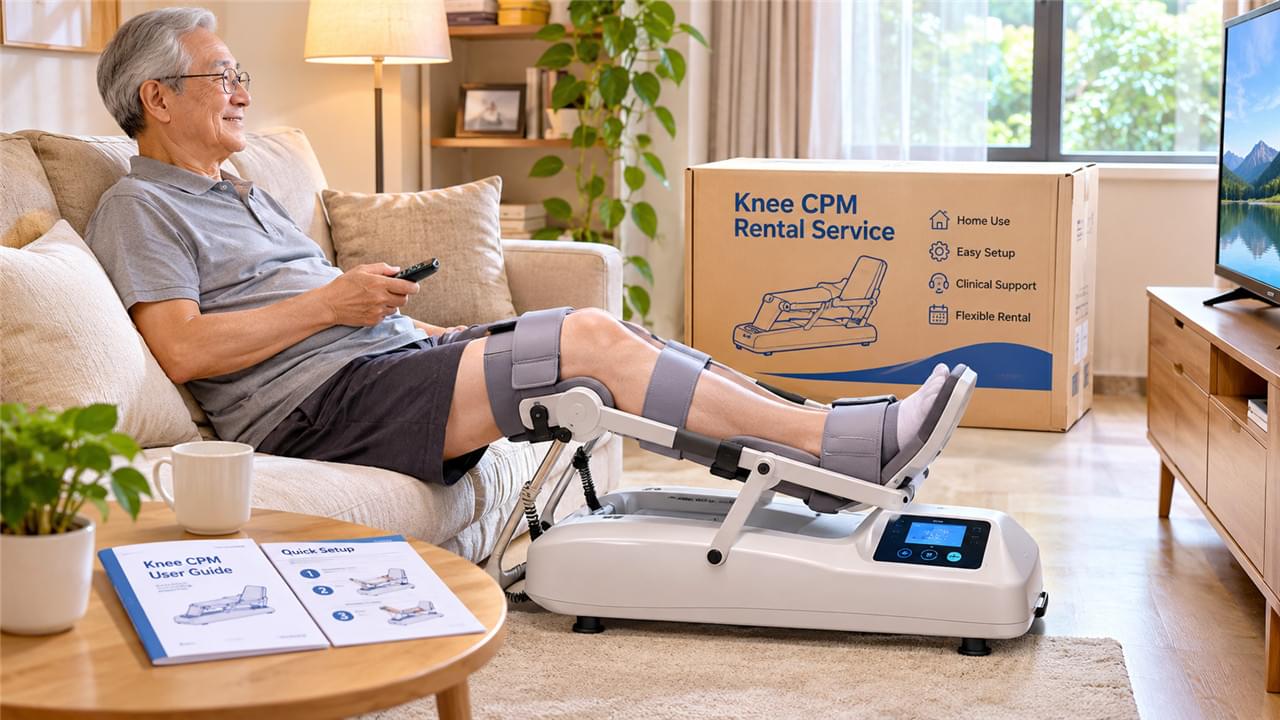
Hospital-based CPM machines offer immediate post-operative use with professional monitoring and intensive early protocols, then transitions out. Home programs — with patient or caregiver training, rental equipment, and remote monitoring capabilities — carry extended treatment courses. Most modern pathways blend both: intensive inpatient start, then rental for the home stretch.
📊 Evidence and Outcomes: What the Research Says
Research Findings on CPM Machines
Here’s the honest picture. In total knee replacement, CPM improves early range of motion, reduces hospital length of stay, decreases manipulation under anesthesia, and patients like it — but long-term outcomes end up similar with or without it. In shoulder surgery, the evidence supports protected early motion, reduced stiffness, and better rehabilitation compliance. The cost-benefit math weighs equipment and rental costs against reduced complication rates, shorter rehabilitation courses, and faster return to function.
Current Recommendations
Where CPM earns its place: total knee replacement (short-term benefit), complex joint procedures, revision surgeries, and patients at high risk of stiffness.
Where evidence is limited: routine ACL reconstruction, simple arthroscopic procedures, and long-term functional gains.
The sensible read: an individualized approach — patient factors, surgeon preference, resource availability, and cost all matter. CPM is a useful tool, not a universal prescription. The American Academy of Orthopaedic Surgeons publishes the clinical practice guidelines that most protocols trace back to.
🙋 Patient Education and Compliance
Setting Expectations
Patients deserve a straight description of the experience: a sensation of continuous movement, some initial discomfort that fades with adaptation, and possible sleep disruption. The therapy goals are equally clear — range of motion improvement, pain management, swelling reduction, and faster recovery. Setting these expectations before the machine arrives prevents the day-two phone call where the patient has quietly unplugged it.
Compliance Strategies
The barriers are predictable: discomfort, inconvenience, sleep disturbance, equipment complexity, and sheer time commitment. The countermeasures are too — patient education, comfort optimization, flexible scheduling, and regular follow-up. Compliance is the difference between a machine that heals and a machine that collects dust in the corner; the American Physical Therapy Association offers practical adherence resources for home therapy programs.
🛒 Equipment Selection and Management
Purchasing Considerations
For hospitals and clinics buying CPM machines, the decision hinges on patient volume, procedure mix, budget, and in-house maintenance capability. For home rental programs, the checklist is insurance coverage, rental duration, delivery and setup, and technical support. Rental almost always wins for single-patient courses; purchase only makes sense at volume.
Maintenance and Safety
Daily maintenance is non-negotiable: cleaning protocols, inspection procedures, patient safety checks, and function verification before each use. Troubleshooting means knowing the common error codes, addressing patient concerns quickly, and having technical support and emergency procedures on hand. A machine down for two days in a three-week protocol is a meaningful chunk of lost therapy time.
🔧 Alternative and Complementary Equipment
Active-Assisted Devices
CPM’s evolution continues in active-assisted equipment — motorized exercise devices where the patient initiates movement and the motor assists as needed, with biofeedback integration and progress tracking. Robotic rehabilitation goes further: advanced motion control, bilateral training, gaming integration, and built-in outcome measurement.
Manual Therapy Tools
The low-tech alternatives remain legitimate: manual therapy techniques, patient-directed exercises, gravity-assisted motion, and aquatic therapy. For many patients, a skilled therapist’s hands outperform a motor — the best programs know when to use each.
❓ Frequently Asked Questions
Q1: Does CPM therapy hurt?
A: It shouldn’t cause significant pain. Mild discomfort or stretching sensations are normal, especially when starting or increasing range. Adjust the machine to your comfort level and use prescribed pain medication as directed. Sharp pain means stop and call your provider.
Q2: How many hours per day should I use a CPM machine?
A: Typical protocols run 6–8 hours daily, though this varies by procedure. Some call for continuous waking-hours use; others split it into multiple sessions. Follow your surgeon’s specific protocol.
Q3: Can I sleep while using a CPM machine?
A: Many patients do, especially early post-op — though sleep quality may suffer initially. Some prefer daytime-only use. If you sleep with the device, ensure safety straps are properly secured.
Q4: Will insurance cover CPM machine rental?
A: Most plans cover rental when medically necessary and prescribed. Medicare typically covers CPM for total knee replacement up to 3 weeks. Check your plan for prior authorization and in-network supplier requirements.
Q5: How is CPM different from physical therapy?
A: CPM provides passive, automated movement that maintains mobility without effort. Physical therapy involves active exercise, strengthening, and manual techniques. CPM supplements physical therapy — it never replaces it. Both together produce the best recovery.
Q6: When should CPM therapy start after surgery?
A: Typically within 24 hours for appropriate procedures. Early mobilization prevents stiffness and promotes healing — but exact timing depends on the procedure, surgical technique, and your recovery status. Your surgeon sets the start time.
🏁 The Bottom Line
CPM machines occupy a specific and useful niche in post-surgical rehabilitation: they keep joints moving safely when patients can’t or won’t move them themselves. The knee CPM machine after total knee replacement remains the classic use case, with real short-term gains in motion, hospital stay, and patient confidence — while the evidence rightly tempers expectations for routine cases.
The winning formula hasn’t changed since Salter’s day: controlled early motion, individualized protocols, honest patient education, and a physical therapy program that takes over as soon as the patient is ready to work. For more recovery equipment, explore the complete orthopedic accessories and rehabilitation devices guide.
Medical Disclaimer
The information provided is for educational purposes only and does not constitute medical advice. CPM therapy should only be used under the supervision of qualified healthcare professionals. Individual treatment protocols vary based on specific surgical procedures and patient factors.
 English
 Arabic
 French
 German
 Italian
 Japanese
 Korean
 Portuguese
 Turkish
 Russian
 Spanish