


Knee braces are among the most commonly prescribed orthopedic accessories, serving millions of patients dealing with injuries, chronic conditions, and post-surgical recovery. The knee is the largest — and arguably the most temperamental — joint in the human body, and the support it needs changes dramatically depending on what’s gone wrong.
The market keeps expanding, driven by rising sports participation, growing osteoarthritis prevalence, and greater awareness of preventive joint care. This guide breaks down every major brace type, where it fits clinically, and how the right choice actually gets made — part of our complete orthopedic accessories and rehabilitation devices guide.
🛡️ Types of Knee Braces
Prophylactic Knee Braces: Protection Before the Whistle
Prophylactic braces are designed to prevent injuries, particularly in high-risk sports.
Design Features:
- Hinged lateral supports
- Rigid or semi-rigid construction
- Strapping systems for secure fit
- Often custom-fitted for individual athletes
Common Applications:
- Football and contact sports
- Skiing and snowboarding
- Basketball and volleyball
- Activities with high pivoting demands
Effectiveness Considerations: While prophylactic braces can provide some protection, studies show mixed results regarding injury prevention. Proper technique, conditioning, and sport-specific training remain the primary preventive measures.
Functional Knee Braces After Ligament Injury
Functional braces provide stability for knees with existing ligament injuries — ACL, PCL, MCL, and LCL tears.
ACL Braces:
- Custom-molded frames with four-point leverage systems
- Rigid hinges with extension stops
- Designed to prevent anterior tibial translation
- Used post-surgery or for conservative management
PCL Braces:
- Posterior support structures and dynamic force systems
- Less common than ACL braces
- Specific design for posterior stability
Combined Ligament Braces:
- Multi-ligament injury support with comprehensive stabilization
- Heavier construction, often custom-fabricated
Rehabilitative Knee Braces: The ROM-Control Phase
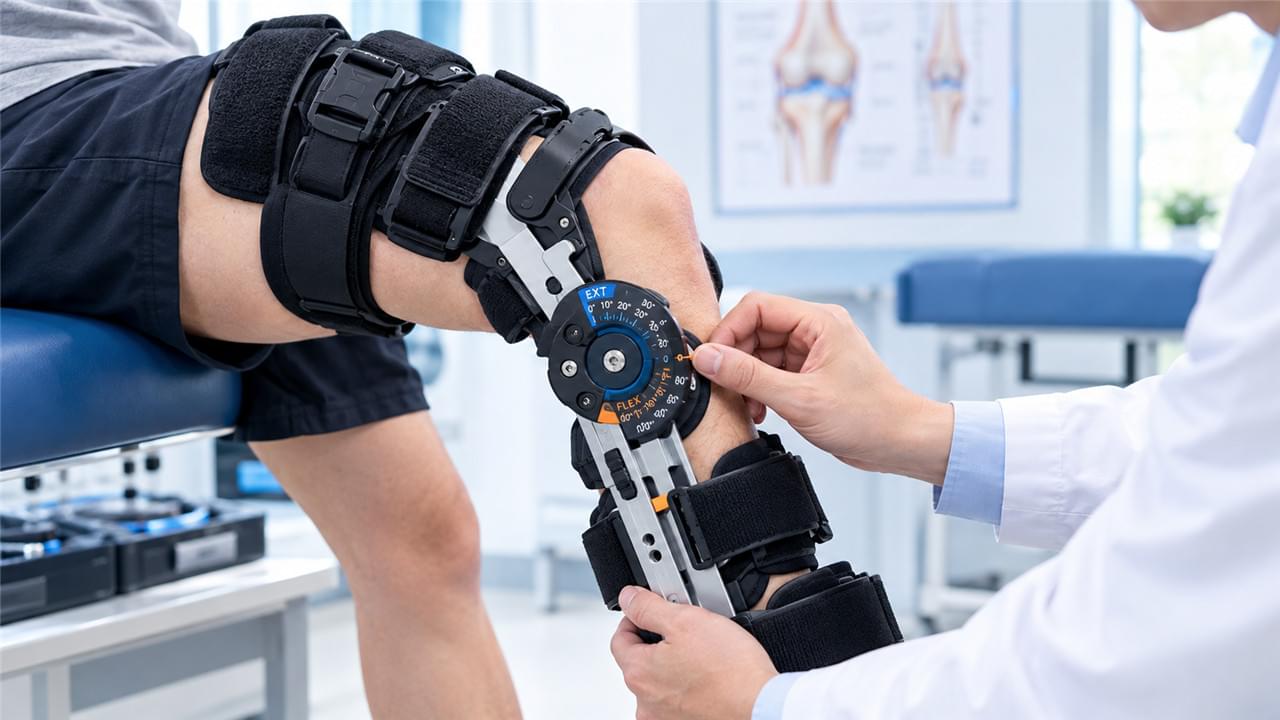
These braces are used post-injury or post-surgery to control range of motion and protect healing structures. A hinged knee brace in this category is the workhorse of every post-op protocol.
Post-Operative Features:
- Hinged designs with adjustable ROM stops
- Telescoping frames for swelling accommodation
- Quick-release mechanisms and locking capabilities
- Extension stops (0°, 10°, 20°, 30°), flexion stops (45°, 60°, 90°)
- Adjustable straps for compression
Common Post-Surgical Applications:
- ACL reconstruction
- Meniscus repair
- Patellar realignment
- Total knee replacement
- Cartilage restoration procedures
Osteoarthritis Knee Braces: Unloaders Explained
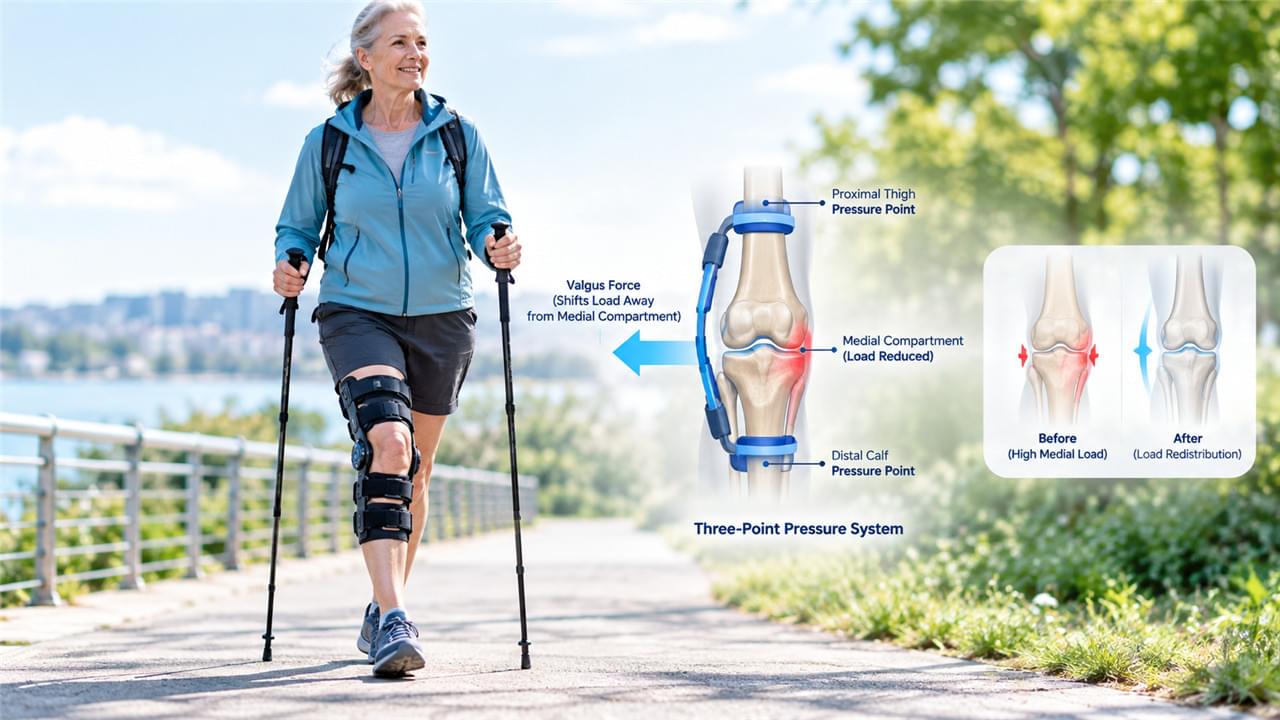
The osteoarthritis knee brace — better known as an unloader — is specifically designed for unicompartmental OA, redistributing weight away from the damaged compartment.
Medial Compartment Unloaders:
- Valgus-creating force reduces load on the inner knee
- Most common type (medial OA predominance)
- Hinged design with three-point pressure system
Lateral Compartment Unloaders:
- Varus-creating force reduces load on the outer knee
- Less common application, similar mechanical principles
Benefits:
- Pain reduction and improved function
- Delayed need for joint replacement
- A genuine non-surgical management option
Knee Compression Sleeves: Soft Support, Honest Limits
A knee compression sleeve provides mild compression and proprioceptive feedback — no hinges, no rigid shell.
Materials:
- Neoprene, elastic knit fabrics, moisture-wicking synthetics
- Copper-infused materials (more marketing than mechanism)
Applications:
- Mild arthritis pain and swelling management
- General support during activity
- Proprioceptive enhancement and warmth for stiff joints
Limitations: Minimal structural support. Not suitable for instability. Limited injury protection. If your knee is unstable, a sleeve is a comfort purchase — not a treatment.
Patellofemoral Braces: Fixing the Tracking Problem
Designed specifically for patellar tracking disorders and anterior knee pain.
Design Elements:
- Buttress pads (C-shaped or J-shaped)
- Adjustable patellar stabilization and compression
- Often combined with a hinge
Conditions Treated:
- Patellar subluxation/dislocation
- Chondromalacia patella
- Patellofemoral pain syndrome, runner’s knee, jumper’s knee
📏 How Knee Braces Are Selected and Fitted
Clinical Assessment
Proper selection requires comprehensive evaluation:
Diagnostic Considerations:
- Specific diagnosis and injury pattern
- Stability testing results
- Range of motion limitations
- Pain location and characteristics
- Activity level and goals
Patient Factors:
- Body size and shape, skin sensitivity
- Compliance capability and activity demands
- Previous brace experience
Measurement and Sizing
Key Measurements:
- Thigh circumference (6 inches above mid-patella)
- Knee circumference (center of patella)
- Calf circumference (6 inches below mid-patella)
- Leg length considerations
Fitting Guidelines:
- Snug but not constrictive
- No distal edema
- Proper hinge alignment with the joint axis
- Secure without migration, comfortable for the intended wear duration
Custom vs. Off-the-Shelf Knee Braces
Off-the-Shelf (OTS) Braces:
- Cost-effective and immediately available
- Multiple size options and adjustable features
- Suitable for many applications
Custom Braces:
- Precise anatomical fit and optimal mechanical alignment
- Required for complex cases
- Higher cost, longer fabrication time
- Best for high-performance athletes
🏥 Clinical Applications by Condition
Ligament Injuries
ACL Injuries: Functional braces for return to sport, post-surgical rehabilitation braces, conservative management support. The NIH’s resources on knee injuries provide background on injury mechanisms that drive these bracing decisions.
MCL Injuries: Hinged braces with varus/valgus control, Grade I–III injury management.
Multi-Ligament Injuries: Complex bracing requirements, often custom-fabricated, extended rehabilitation with close monitoring. When bracing fails or injuries are severe, surgical reconstruction with orthopedic implants becomes the treatment pathway.
Osteoarthritis Management
Unicompartmental OA: Unloader braces as first-line non-surgical treatment — with patient selection criteria, compliance challenges, and cost-effectiveness all factored in.
Patellofemoral OA: Patellar stabilization braces combined with activity modification and other treatments.
Meniscal Injuries
Post-Repair Protection: Rehabilitative braces with ROM control, protected weight-bearing protocols, gradual return to activity.
Degenerative Tears: Compression sleeves for symptom management, activity-specific bracing, often combined with injection therapies.
⛷️ Sports-Specific Considerations
Contact Sports
Football: Prophylactic bracing common for linemen, functional braces for skill positions, custom fitting essential.
Soccer: Lightweight functional braces, ACL protection priority, minimal bulk for ball control.
Overhead and Pivoting Sports
Basketball: Prophylactic bracing programs, quick direction change support.
Skiing: Injury prevention braces, custom-molded options, cold weather considerations.
Running and Endurance Sports
Marathon Training: Patellar straps for runner’s knee, compression for recovery, minimalist designs preferred.
Triathlon: Quick-transition considerations, multi-sport functionality, moisture management.
📊 Compliance and Outcomes
Patient Compliance Factors
Barriers: Discomfort and skin irritation, cosmesis concerns, activity limitations, complexity of use, cost.
Compliance Strategies: Patient education, proper fitting, gradual wear progression, regular follow-up, prompt attention to concerns. A brace in the closet helps nobody.
Evidence and Outcomes
Functional Braces: Improved subjective stability, variable objective measurements, significant psychological benefits, facilitated return to sport. The AAOS OrthoInfo knee bracing resources summarize the clinical evidence base for patients and clinicians.
Unloader Braces: Documented pain reduction and functional improvement — cost-effective for appropriate patients, with compliance directly affecting outcomes.
Prophylactic Braces: Mixed evidence for injury prevention; may reduce MCL injuries in contact sports. Technique remains more important than equipment.
❓ FAQ: Knee Braces in Real Life
Q1: How tight should my knee brace be?
Your knee brace should be snug enough to stay in place during activity without sliding down, but not so tight that it causes pain, numbness, or tingling. You should be able to fit one finger between the brace and your skin. If you notice swelling below the brace, discoloration, or increased pain, it’s too tight.
Q2: Can I wear a knee brace while sleeping?
This depends on your specific condition and healthcare provider’s instructions. Some post-surgical protocols require nighttime bracing, while others do not. Generally, soft compression sleeves can be worn during sleep, but rigid hinged braces are typically removed unless specifically prescribed for nighttime use.
Q3: How long should I wear my knee brace after ACL surgery?
Post-ACL reconstruction bracing protocols vary by surgeon preference and individual healing. Typically, a rehabilitative brace is worn for 4–6 weeks post-surgery, followed by a functional brace during return-to-sport activities for 6–12 months. Some athletes continue using functional braces indefinitely for high-risk activities.
Q4: Will a knee brace weaken my knee muscles?
Prolonged use of rigid knee braces can lead to muscle atrophy if not combined with appropriate rehabilitation exercises. However, functional braces used during high-risk activities don’t typically cause weakness when combined with proper strengthening programs. Follow your physical therapist’s exercise recommendations.
Q5: What’s the difference between a knee brace and a knee sleeve?
Knee braces are structured devices with hinges, straps, and rigid components designed to provide significant support, stability, and protection. Knee sleeves are soft, elastic garments that provide compression, warmth, and mild proprioceptive feedback but minimal structural support. Braces are for instability and injury; sleeves are for mild support and comfort.
Q6: Can knee braces prevent injuries?
Prophylactic knee braces may provide some protection, particularly for MCL injuries in contact sports, but they cannot prevent all injuries. Proper conditioning, technique training, and neuromuscular programs are more effective. Braces should be viewed as supplementary protection, not primary prevention.
🏁 Conclusion
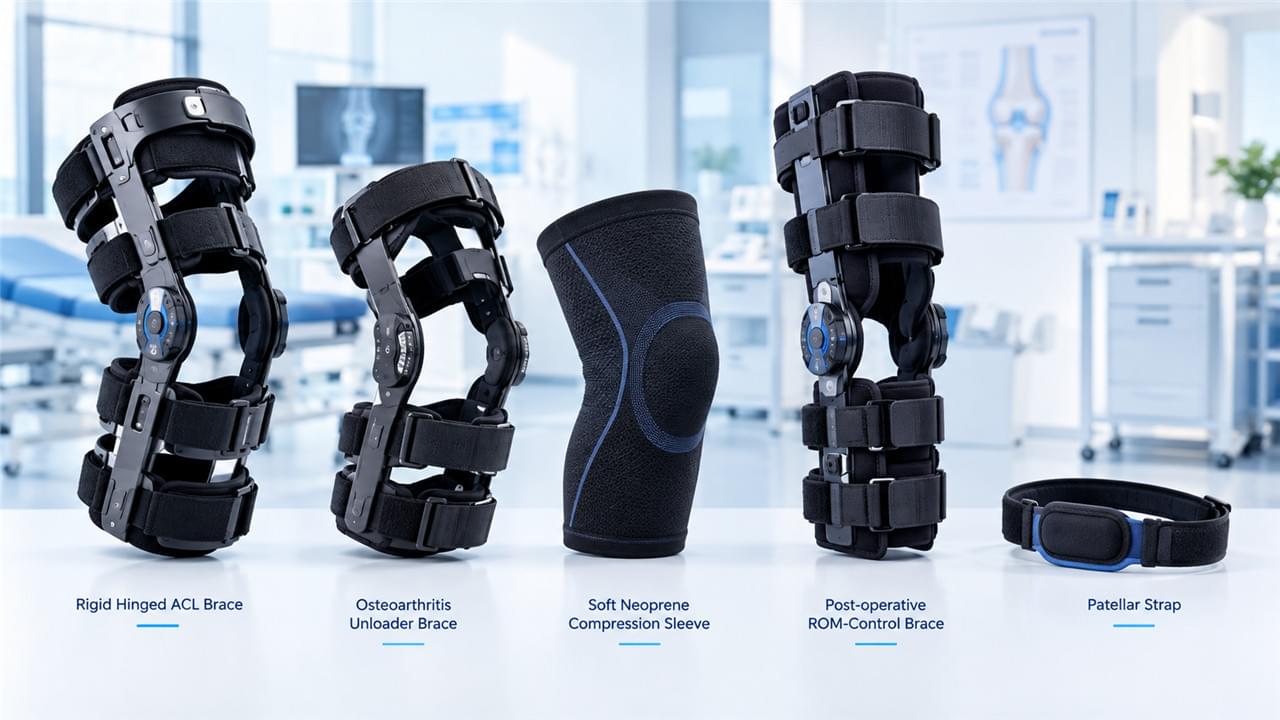
Knee braces aren’t one product — they’re six distinct tool categories, each built for a different phase of the injury-to-recovery arc. Match the type to the condition, size it properly, and get the patient bought into wearing it, and the brace does exactly what it promises. Skip any of those three steps, and even the best-engineered hinged knee brace ends up in a drawer.
Return to: Orthopedic Accessories and Rehabilitation Devices.
Medical Disclaimer
The information provided is for educational purposes only and does not replace professional medical advice. Knee brace selection should be performed by qualified healthcare providers based on individual assessment. Improper brace use can lead to complications or inadequate protection.
 English
 Arabic
 French
 German
 Italian
 Japanese
 Korean
 Portuguese
 Turkish
 Russian
 Spanish