


Orthopedic Market Size by Product Type and Region
The orthopedic market size continues to expand as healthcare systems respond to aging populations, rising trauma injuries, and growing demand for advanced surgical technologies.
By 2026, the global orthopedic devices industry is expected to exceed USD 62 billion, making it one of the most dynamic sectors within the medical device industry.
However, understanding the total number alone does not reveal the full picture. The most valuable insights come from analyzing orthopedic market size by product type and orthopedic market size by region.
These segment-level insights help manufacturers, distributors, and healthcare investors identify where demand is strongest and where future growth opportunities lie.
This article explores the global orthopedic devices market segmentation, providing a clearer view of how the industry is structured and how different product segments contribute to the overall orthopedic market.
Why Orthopedic Market Size Data Matters
Understanding orthopedic market size data is essential for companies involved in orthopedic manufacturing, distribution, and product development.
Accurate market segmentation supports several strategic decisions:
📊 Product portfolio planning
🌍 Global market expansion strategies
🏭 Manufacturing capacity planning
💰 Pricing benchmarks across regions
Generic market reports often combine multiple product categories or use inconsistent definitions. A clearer understanding of orthopedic market size by product type helps companies allocate resources more effectively.
For manufacturers and distributors, aligning production capabilities with market demand is essential to remain competitive in the rapidly evolving orthopedic industry.
Global Orthopedic Devices Market Segmentation
The global orthopedic devices market segmentation is generally divided into four primary product categories. Each segment contributes differently to the overall orthopedic market size and has unique demand drivers.
These four core segments include:
🦴 Joint reconstruction devices
🧬 Spine devices
🔩 Trauma implants
⚙ Surgical instruments and accessories
Understanding these segments helps industry professionals identify which product categories offer the greatest opportunities.
Orthopedic Market Size by Product Type: Joint Reconstruction Devices
Joint reconstruction represents the largest portion of the orthopedic market size by product type, accounting for approximately 38% of global orthopedic device revenues.
Common joint reconstruction devices include:
🦴 Total hip arthroplasty implants
🦴 Total knee arthroplasty implants
🦴 Shoulder replacement systems
🦴 Partial resurfacing implants
Joint replacement procedures continue to increase as populations age and degenerative joint diseases become more common.
According to the American Academy of Orthopaedic Surgeons, more than 2.5 million hip and knee replacement surgeries are performed each year in the United States alone.
The segment is dominated by large multinational manufacturers, but mid-tier suppliers and OEM partners are increasingly supporting global distribution networks.
Orthopedic Market Size by Product Type: Spine Devices
Spine implants represent approximately 22% of global orthopedic market size.
These devices are used to treat spinal instability, degenerative disc disease, and traumatic vertebral injuries.
Typical spine implant systems include:
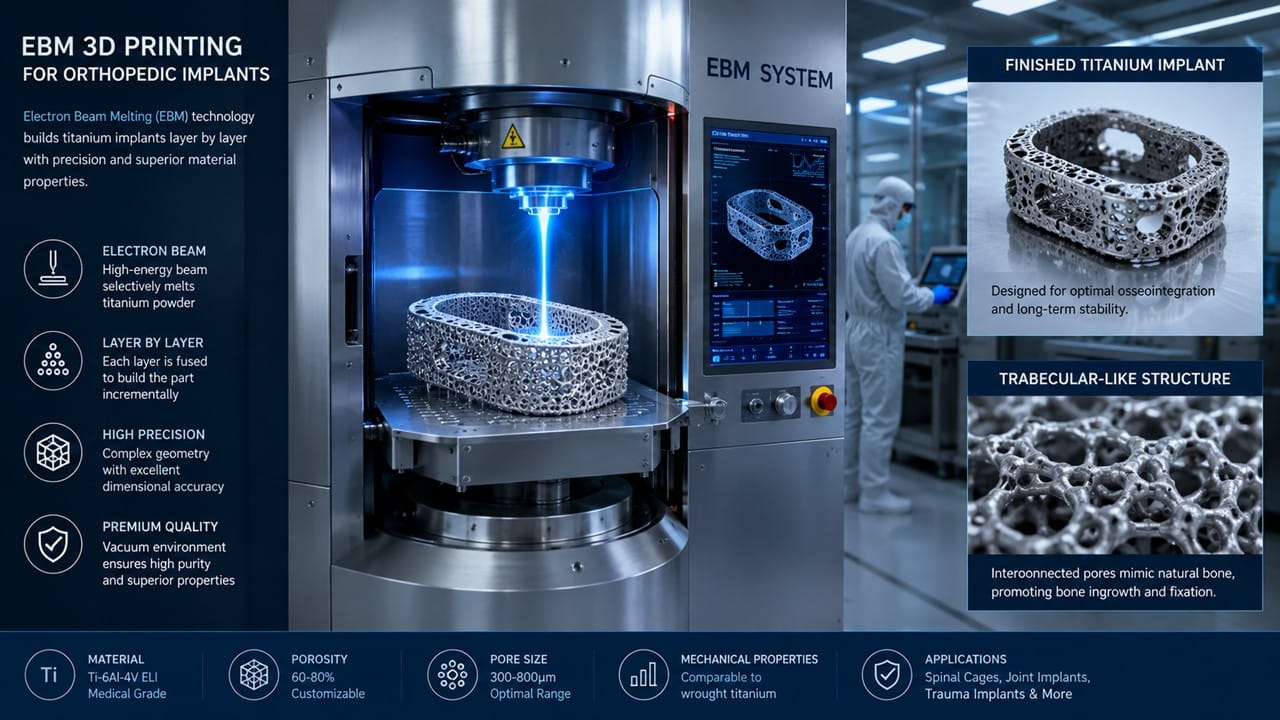
🧬 Interbody fusion cages
🧬 Pedicle screw systems
🧬 Rod fixation systems
🧬 Cervical disc replacement implants
The growing adoption of minimally invasive spine surgery (MISS) is driving demand for advanced implant designs and specialized surgical instruments.
Because spine implants are located close to critical neural structures, regulatory requirements from the U.S. Food and Drug Administration are particularly strict.
Manufacturers supplying this segment must maintain high levels of quality control and regulatory compliance.
Orthopedic Market Size by Product Type: Trauma Implants
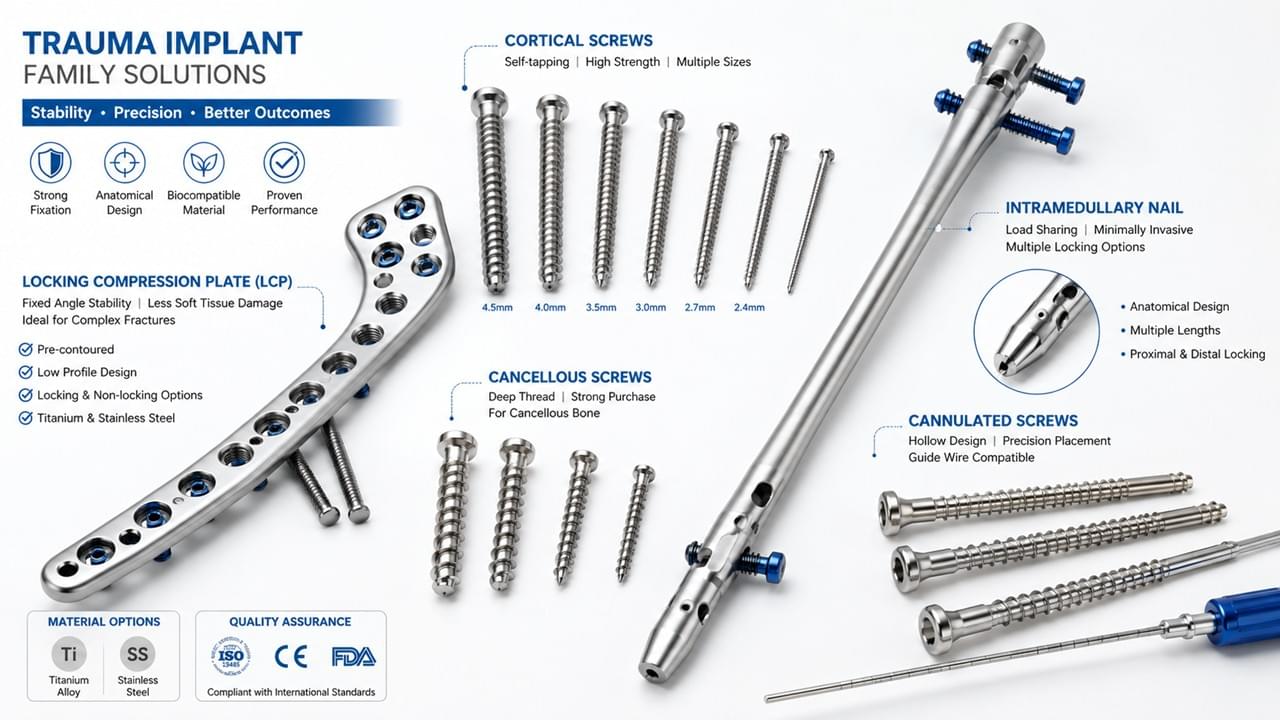
Trauma implants account for roughly 18% of the global orthopedic market size and are used for fracture fixation procedures.
Common trauma implant devices include:
🔩 Locking compression plates
🔩 Intramedullary nails
🔩 Cannulated screws
🔩 External fixation systems
Unlike elective orthopedic procedures, trauma surgeries occur unexpectedly. As a result, trauma implants are required by hospitals worldwide regardless of economic conditions.
According to the World Health Organization, road traffic injuries remain one of the leading causes of musculoskeletal trauma globally.
This consistent demand makes trauma implants one of the most stable segments within the orthopedic devices market.
For example, many hospitals rely on complete trauma systems that include implants and surgical instruments for fracture fixation procedures.
Orthopedic Market Size by Product Type: Surgical Instruments and Accessories
Surgical instruments and orthopedic power tools represent approximately 22% of the overall orthopedic market size.
These products support orthopedic procedures and include:
⚙ Orthopedic surgical instrument sets
⚙ Bone drills and power tools
⚙ Implant insertion tools
⚙ Surgical navigation accessories
Even the most advanced implants cannot be used without specialized instruments designed for orthopedic surgery.
Hospitals increasingly prefer suppliers capable of delivering complete orthopedic surgical systems rather than individual devices.
See examples of orthopedic instrument solutions:
https://www.orthopdevices.com/product-category/instrument-kits/
Orthopedic Market Size by Region
Analyzing orthopedic market size by region reveals how demand differs across global healthcare systems.
North America: Largest Orthopedic Market
North America remains the largest contributor to the global orthopedic market size.
The region generates approximately USD 23–25 billion annually.
Key market characteristics include:
🏥 High procedure volumes
💰 Premium implant pricing
📈 Strong brand recognition
📜 Strict regulatory standards
The United States market is heavily regulated by the U.S. Food and Drug Administration, which creates significant barriers for new market entrants.
Europe: Mature but Evolving Market
Europe accounts for approximately USD 17–18 billion in orthopedic device revenues.
The implementation of the European Union Medical Device Regulation has introduced stricter clinical evidence and documentation requirements.
These regulatory changes are reshaping the competitive landscape and encouraging consolidation among orthopedic manufacturers.
Asia-Pacific: Fastest Growing Orthopedic Market
Asia-Pacific represents the fastest-growing region in the global orthopedic devices market.
The region currently generates approximately USD 13–14 billion in annual orthopedic revenues.
Growth is being driven by:
🌏 Rapid healthcare infrastructure expansion
🌏 Increasing surgical procedure volumes
🌏 Rising medical device manufacturing capacity
China, India, and Southeast Asia are expected to remain major growth engines for orthopedic device demand over the next decade.
Working with Experienced Orthopedic Manufacturing Partners
As the orthopedic market size continues to expand globally, many distributors and medical device brands seek reliable manufacturing partners.
Companies like AMIS Orthopedic support international customers with orthopedic implant and surgical instrument manufacturing solutions.
Manufacturing partners play a crucial role in helping orthopedic brands scale production, maintain regulatory compliance, and meet global market demand.
Learn more about the company and manufacturing capabilities here:
https://www.orthopdevices.com/about/
FAQ: Orthopedic Market Size
1.What is the current orthopedic market size?
The global orthopedic market size is expected to exceed USD 62 billion by 2026, driven by aging populations and rising surgical procedure volumes.
2.Which segment has the largest orthopedic market share?
Joint reconstruction devices hold the largest share, accounting for approximately 38% of global orthopedic device revenue.
3.Which region has the fastest growth in orthopedic devices?
Asia-Pacific is currently the fastest-growing orthopedic market due to expanding healthcare systems and increasing surgical demand.
4.What products are included in the orthopedic devices market?
The main product categories include joint reconstruction implants, spine devices, trauma implants, surgical instruments, and orthopedic power tools.
Understanding orthopedic market size by product type and region provides valuable insights for manufacturers, distributors, and healthcare investors.
Joint reconstruction dominates the market in revenue, trauma implants remain essential for global fracture treatment, and Asia-Pacific represents the fastest-growing regional market.
As orthopedic demand continues to expand worldwide, companies that align their product strategies with these market trends will be best positioned for long-term growth.
For a broader industry overview, explore our main guide to the global orthopedic devices market.
 English
 Arabic
 French
 German
 Italian
 Japanese
 Korean
 Portuguese
 Turkish
 Russian
 Spanish