


The right mobility aids don’t just help someone walk — they hand people back their lives. Millions of people worldwide stay independent, safe, and socially connected because of these devices, whether it’s four weeks with a walker after hip surgery or a lifetime in a wheelchair with a spinal cord injury.
And the market keeps growing. Aging populations, rising disability awareness, and genuine technological advances — think power-assist systems and lithium batteries — have made today’s mobility aids lighter, smarter, and more capable than ever. But choice creates confusion: cane, crutch, walker, rollator, manual chair, power chair — where do you even start?
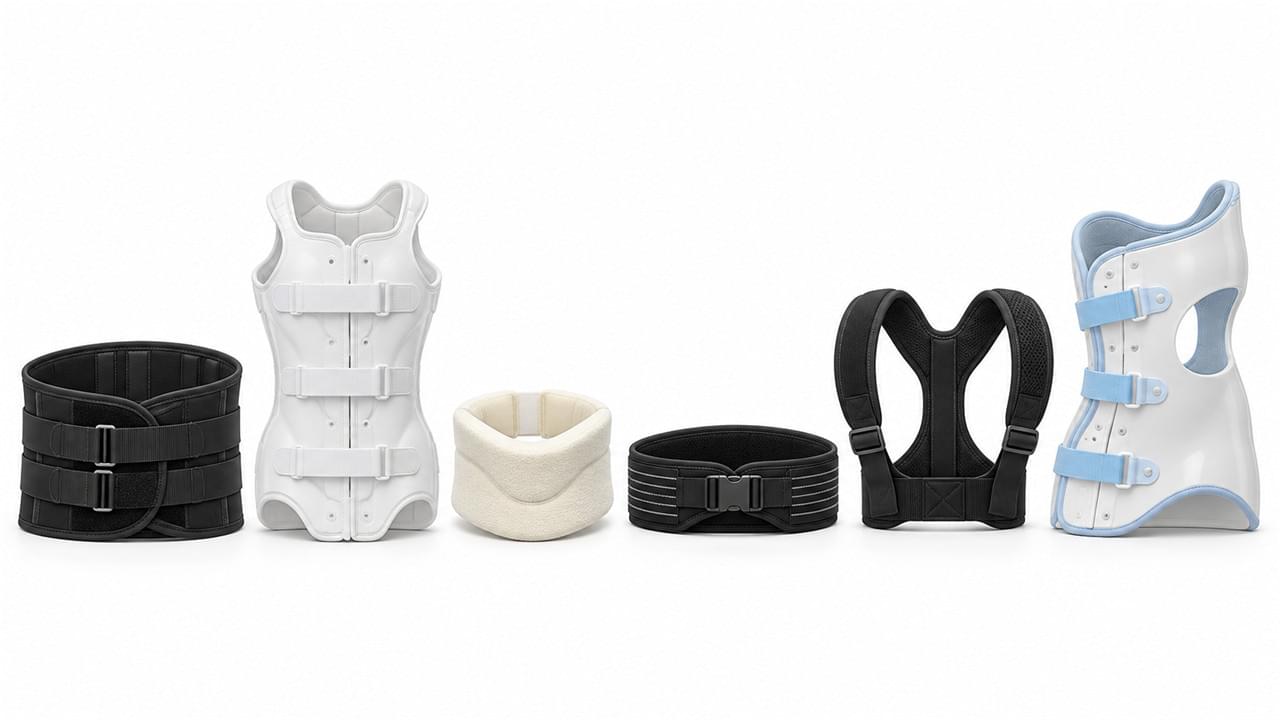
This guide breaks down every major category, how to fit each device properly, and what safety rules actually prevent falls. It’s one chapter of our complete guide to orthopedic accessories and rehabilitation devices, which covers the full recovery toolkit from braces to CPM therapy.
🚶 Walking Aids: Canes, Crutches, and Walkers
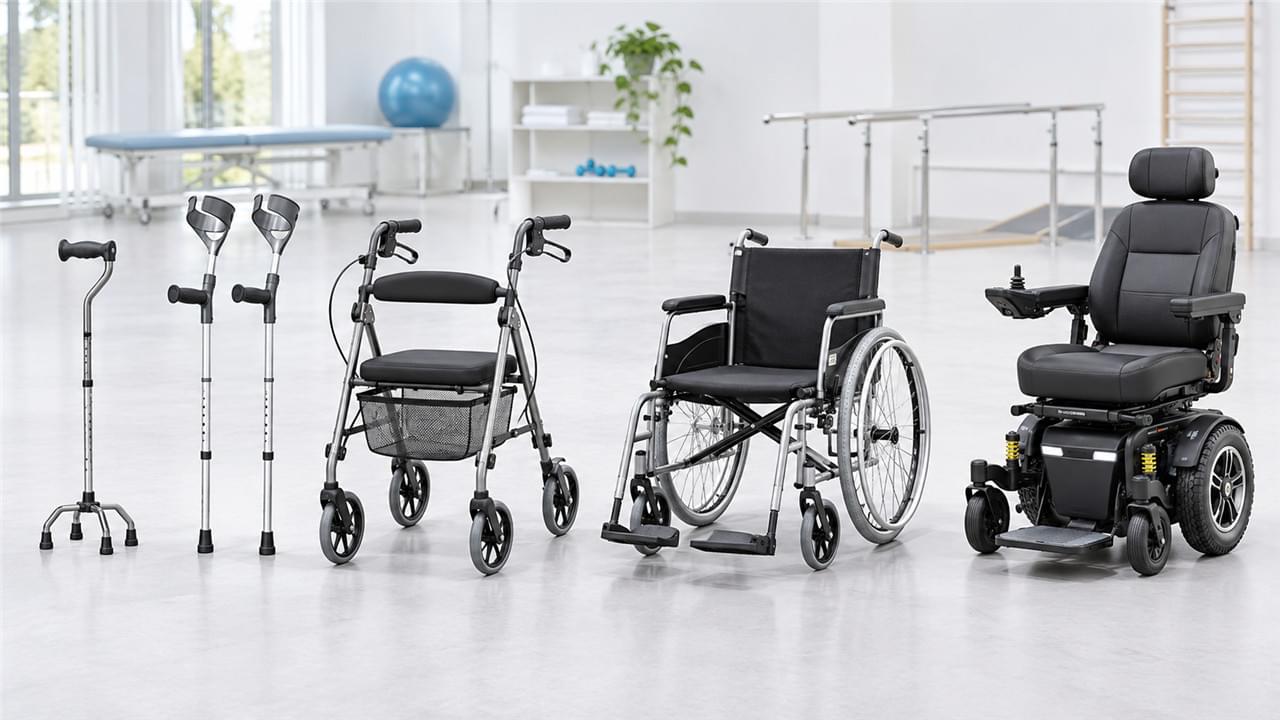
Canes: Light Support for Balance Issues
Canes deliver single-point support — the right choice for mild balance or stability problems, and the most affordable entry among walking aids for seniors.
The main types:
- Standard single-point canes — simple, lightweight, various handle styles, minimal support
- Quad canes — four-point base, self-standing, more stable but heavier
- Folding canes — portable and travel-friendly with adjustable height
- Seat canes — combine a walking aid with a resting seat for fatigue management (limited weight capacity, not for continuous sitting)
Selection comes down to: height adjustment (handle at wrist crease when standing), handle comfort and grip, weight capacity, and tip condition — worn tips are a leading cause of cane-related falls.
Crutches: Weight Transfer to the Upper Body
Crutches move load from the legs to the upper body, serving non-weight-bearing and partial weight-bearing situations.
Axillary (underarm) crutches are the most common type — adjustable, effective, but they demand good upper body strength, and leaning on the top pad risks axillary nerve compression. Forearm (Lofstrand) crutches wrap a cuff around the forearm; they’re more maneuverable and better for long-term use, which is why active users prefer them. Platform crutches support the forearm flat — a specialized alternative when wrist or hand limitations exist.
Fitting rules: 2–3 finger widths between armpit and crutch top, elbows flexed 15–30 degrees on the handgrip, tips in good condition.
Gait patterns: four-point (maximum stability), two-point (faster, needs coordination), three-point (one leg non-weight-bearing), and the advanced swing-to and swing-through patterns.
Walkers and Rollators: Maximum Walking Stability
Walkers provide the most stable support of any walking aid — the go-to for significant balance or weight-bearing limitations.
- Standard walkers — four rubber-tipped legs, must be lifted to advance, maximum stability
- Two-wheeled walkers — front wheels glide, rear legs stay fixed; easier to advance
- Four-wheeled walkers and rollators — all wheels, hand brakes essential, usually a seat and basket, best outdoors — but they require good hand function
- Three-wheeled walkers — maneuverable in tight indoor spaces, lighter, less stable
- Specialized versions — hemi walkers for one-handed stroke recovery, knee walkers for foot and ankle injuries, bariatric and pediatric sizes
Accessories — baskets, trays, oxygen tank holders, glides — turn a basic walker into a daily companion.

♿ Wheelchairs: Manual and Power
Manual Wheelchairs: From Standard to Ultra-Lightweight
Manual wheelchairs rely on user or caregiver propulsion and suit people with adequate upper body function.
- Standard manual chairs — folding or rigid frames, 16–20 inch seats, 250–300 lb capacity, fine for short-term use
- Lightweight chairs — 25–35 lb, easier to propel and lift into a car, better for daily users
- Ultra-lightweight chairs — under 25 lb, custom-configured, sport-grade performance, premium pricing
- Transport chairs — small rear wheels, caregiver-pushed, compact and affordable, not self-propelled
- Tilt-in-space chairs — seat-to-back angle preserved during tilt for pressure relief and postural support
Power Wheelchairs: Choosing the Right Drive
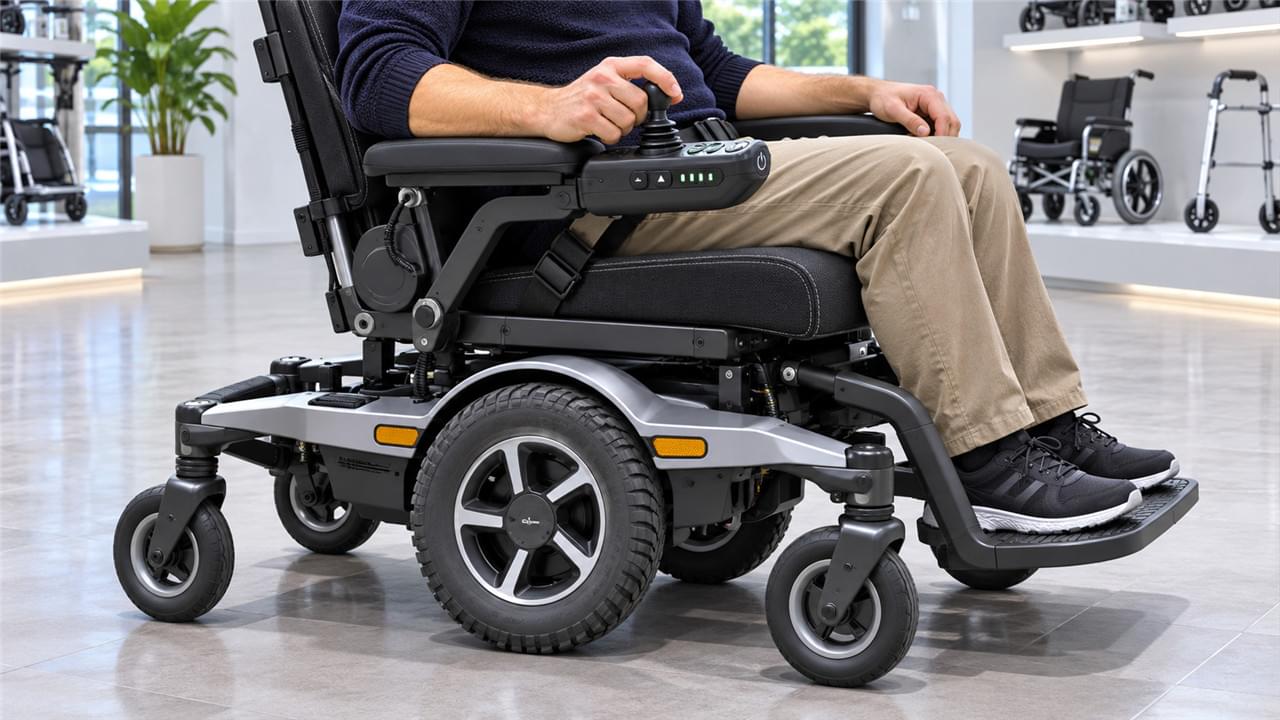
A power wheelchair restores independent mobility when arms can’t do the work — and the drive configuration determines where the chair performs best:
- Rear-wheel drive — traditional, stable at speed, strong outdoors, larger turning radius
- Mid-wheel drive — tightest turning radius on the market, six-wheel stability, best indoors
- Front-wheel drive — climbs well, handles obstacles, medium turning radius
Power-assist add-ons retrofit a manual chair with motorized help — a hybrid that preserves upper body function. Specialized power wheelchairs include standing chairs, reclining chairs for pressure relief, and pediatric and bariatric versions.
Components matter as much as the chair: seating systems (foam, gel, air, honeycomb cushions) manage pressure; controls range from the standard joystick to sip-and-puff and head arrays; and battery choice (AGM, gel, lithium) sets the real-world range.
📏 Selection and Fitting of Mobility Aids
Assessment Process for Choosing Mobility Aids
Good selection starts with an honest assessment in three layers. Physical factors: weight-bearing status, upper extremity strength, balance and coordination, endurance, postural needs. Functional requirements: indoor versus outdoor use, home environment, transportation, activity goals. Cognitive considerations: ability to learn and remember safe techniques, safety awareness, judgment, vision and perception. A device that exceeds the user’s cognitive or physical capacity becomes a hazard, not a helper.
Professional Evaluation
The physical therapist brings gait analysis, functional mobility testing, equipment trials, and training. The occupational therapist covers activities of daily living, home environment, transfers, and adaptive equipment. For complex seating needs, a seating specialist adds pressure mapping, custom seating design, and long-term follow-up. Skipping the professional evaluation to save time is how the wrong device ends up in a closet.
Measurement Guidelines for Mobility Aids
Wheelchair measurements: seat width and depth, back height, armrest height, footrest length — plus overall comfort. Walker and cane fitting: handle height at wrist crease, elbow flexion around 15–30 degrees, upright posture, comfortable grip. Two minutes with a tape measure prevents months of shoulder strain.
🛡️ Safety and Training with Mobility Aids
Safe Use Guidelines for Mobility Aids
The safety rules are simple and non-negotiable. Walkers: all four points contact the ground when bearing weight; brakes engaged before sitting on any rollator. Wheelchairs: brakes on during every transfer, footrests positioned correctly, anti-tip devices where appropriate. Crutches: good tips, correct height, proper gait pattern — and never lean into the underarm pad. Regular maintenance checks close the loop.
Training Requirements
Equipment handed over without training is equipment that causes falls. Initial training covers fitting, safe use techniques, transfer methods, and fall prevention. Advanced skills add curb and ramp negotiation, door management, and emergency procedures. Caregiver training ensures assistance techniques, transfers, and equipment maintenance are done right. For complex power wheelchair systems, resources from RESNA — the Rehabilitation Engineering and Assistive Technology Society — set the professional standard for assessment and training.
💰 Funding and Resources for Mobility Aids
Insurance Coverage
Medicare and Medicaid cover mobility aids deemed medically necessary — expect prior authorization, specific coding requirements, and enrolled suppliers. Private insurance varies by plan with deductibles, copays, and in-network DME supplier rules. Workers’ compensation covers injury-related devices, often with a vocational rehabilitation and return-to-work focus. Documentation is the currency here: the stronger the medical necessity letter, the smoother the approval.
Alternative Funding
Beyond insurance, several routes exist. Veterans benefits through the VA system offer comprehensive coverage for service-connected disabilities. Non-profit organizations provide disease-specific support, community resources, and equipment exchange programs. State and local programs — assistive technology initiatives, loan closets, and financial assistance — fill the gaps. Research support from NIDILRR continues to expand what’s available in assistive technology.
🔧 Maintenance and Care
Daily Maintenance for Mobility Aids
Wheelchairs need tire pressure checks, brake verification, battery care on power chairs, and routine cleaning. Walkers and canes need tip inspection and replacement, height adjustment security, frame integrity checks, and cleaning. Five minutes a week catches 90% of problems before they cause a fall.
Professional Service
Schedule an annual wheelchair service for component replacement and safety inspections — and keep warranty terms in mind. For repairs, use authorized service providers, know your emergency repair options, and ask whether loaner equipment is available so a broken chair doesn’t mean house arrest.
❓ Frequently Asked Questions
Q1: How do I know which mobility aid is right for me?
A: It depends on your abilities, environment, and goals. A physical therapist can run a full assessment — gait analysis, strength testing, balance evaluation — factoring in weight-bearing status, home layout, and intended activities. Trial periods with different devices find the best fit.
Q2: Will my insurance cover a wheelchair or walker?
A: Most plans, including Medicare and Medicaid, cover mobility aids when medically necessary. Expect documentation of need, often a physical therapy evaluation, prior authorization, and use of an in-network DME supplier.
Q3: What’s the difference between a transport wheelchair and a standard wheelchair?
A: Transport chairs have small rear wheels and are designed for caregiver pushing — lighter, compact, cheaper. Standard chairs have large rear wheels with hand rims for self-propulsion. If you have the strength and coordination, a standard chair delivers far more independence.
Q4: How do I properly fit a walker or cane?
A: Handle at wrist-crease level, arms relaxed at your sides — which creates 15–30 degrees of elbow flexion on the grip. Proper height prevents shoulder strain and ensures effective weight-bearing. Adjustable devices allow fine-tuning.
Q5: Can I use a walker on stairs?
A: No — standard walkers should never be used on stairs. Use a cane, crutches, or another person’s support instead. Some specialized stair-climbing walkers exist but require training. Discuss stair navigation with your physical therapist.
Q6: How long should I expect my wheelchair to last?
A: Standard manual chairs typically last 3–5 years, lightweight models 5–8 years with care, and power wheelchairs 5–7 years before major component replacement. Regular maintenance significantly extends life.
🏁 The Bottom Line
Mobility aids span an enormous range — from a 25canetoa25canetoa15,000 custom power wheelchair — and each device answers a specific need. Canes correct mild balance issues; crutches handle non-weight-bearing recovery; walkers and rollators deliver maximum walking stability; manual chairs reward upper body strength; and a power wheelchair hands full independence to those whose arms can’t do the work anymore.
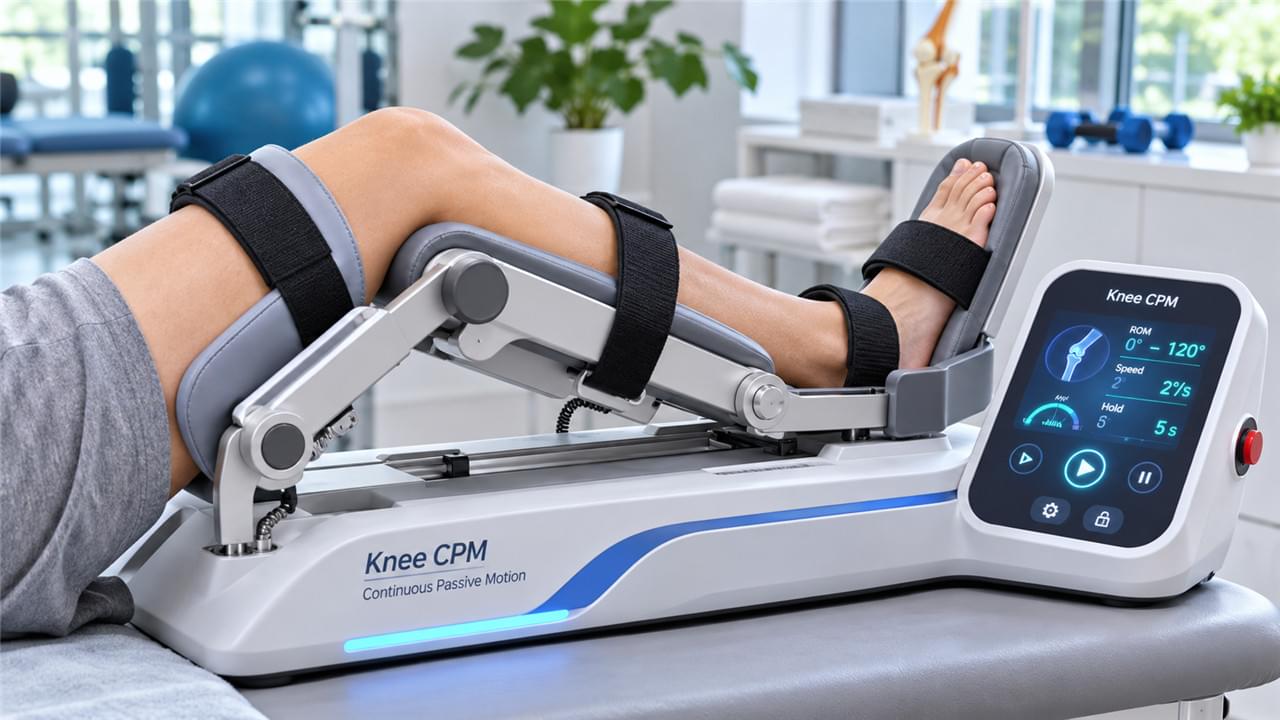
The formula that never changes: match the device to a professional assessment, fit it to the body, train the user properly, and maintain it like the safety equipment it is. For the devices that keep joints moving during recovery, see our CPM machines guide — and for the complete recovery toolkit, return to the orthopedic accessories and rehabilitation devices hub.
Medical Disclaimer
The information provided is for educational purposes only and does not replace professional medical advice. Mobility aid selection and fitting should be performed by qualified healthcare professionals. Improper use of mobility aids can result in falls and injuries.
 English
 Arabic
 French
 German
 Italian
 Japanese
 Korean
 Portuguese
 Turkish
 Russian
 Spanish