


Minimally invasive orthopedic surgery is reshaping how we think about surgical treatment, recovery, and patient comfort. With rising expectations for faster healing and fewer complications, both patients and providers are turning to solutions that minimize trauma while maximizing outcomes.
Thanks to cutting-edge innovations in surgical tools and techniques, minimally invasive orthopedic surgery is now safer, smarter, and more effective than ever before. These game-changing advancements aren’t just improving procedures—they’re transforming lives.
In this blog, we’ll explore seven key innovations that are helping orthopedic teams deliver quicker recoveries and more satisfying results.
🔧 1. Ergonomic Power Tools That Minimize Fatigue and Maximize Precision
Today’s orthopedic power tools—drills, saws, and reamers—are designed with both surgeon comfort and patient outcomes in mind. By integrating ergonomic designs, these tools reduce hand strain and enhance control, especially during long procedures.
Their compact profiles are perfect for minimally invasive orthopedic surgery, where access through small incisions is crucial. Features like anti-slip grips, lightweight bodies, and advanced torque control help maintain precision with minimal disruption to surrounding tissue.
Why it matters: Less surgeon fatigue = greater focus and fewer mistakes. That’s better for both doctor and patient.
🛠 2. Smart Surgical Instruments with Real-Time Feedback
One of the most exciting trends is the rise of “smart” instruments that integrate artificial intelligence (AI) and sensor feedback. These tools measure variables such as pressure, angle, and vibration—then offer real-time alerts during surgery.
This data-guided technology improves decision-making and allows for predictive adjustments, reducing the risk of complications and improving alignment. Some tools even use haptic feedback to help surgeons avoid nerves or arteries in delicate procedures.
Key benefit: Fewer complications and better accuracy, especially in complex joint replacements or spinal surgeries.
🧴 3. Sterile, Single-Use Instrument Kits for Time-Saving Precision
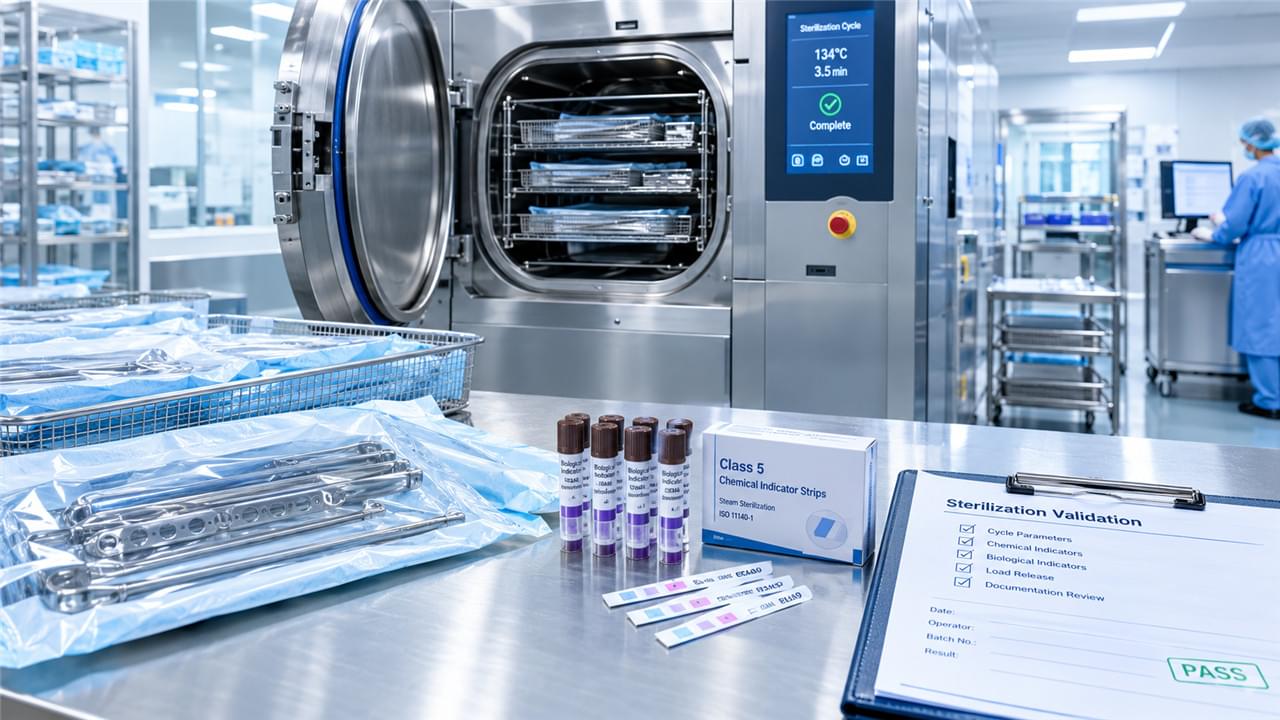
Operating rooms are high-pressure environments where seconds count. Pre-packaged, sterile surgical kits are revolutionizing prep time, especially in outpatient orthopedic centers where turnover must be rapid.
These kits contain all the instruments needed for specific procedures—pre-sterilized, sealed, and ready to use. Beyond reducing infection risks, they also help streamline inventory, prevent missing tools, and ensure consistency.
Perfect for: Ambulatory Surgery Centers (ASCs) focused on speed, safety, and cost control.
🧠 4. AI-Powered 3D Imaging and Surgical Navigation
In orthopedic surgical instruments innovation, imaging is just as crucial as scalpels and screws. Surgeons now have access to AI-enhanced 3D models that visualize joints, fractures, and implants in real time.
These navigation systems provide AR overlays, intraoperative CT scans, and precise guides to align implants or screws. In reduce patient trauma surgery, improved targeting means less cutting and shorter recovery.
Surgeon insight: “It’s like operating with X-ray vision. Every movement is more confident and calculated.”
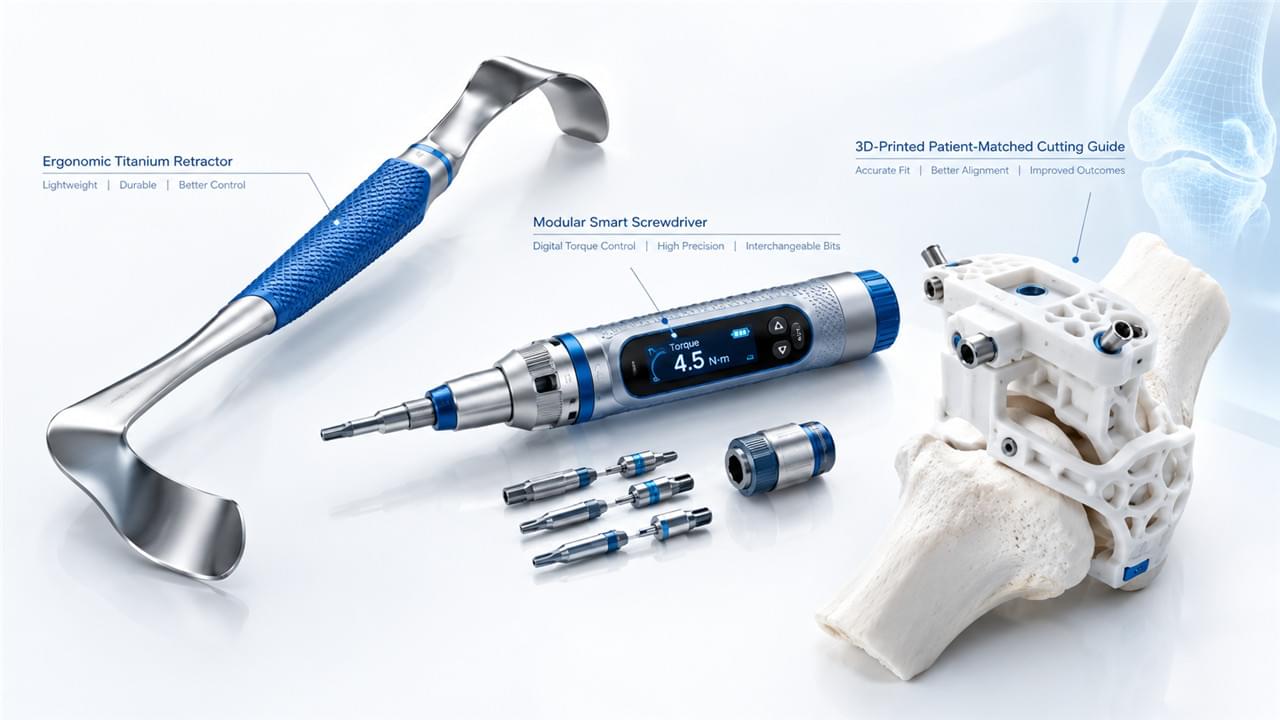
🧩 5. Customized Tools with 3D-Printed Surgical Guides
Thanks to 3D printing, surgical instruments and guides can be custom-built to fit each patient’s anatomy. This personalization means better fit, more accurate alignment, and reduced need for intraoperative corrections.
These customized tools are often used in knee replacements, hip procedures, and spinal fusions, improving implant longevity and patient satisfaction.
Result: Faster healing, fewer revision surgeries, and better long-term outcomes.
🧬 6. Biocompatible Materials That Promote Healing
Modern instruments are made from advanced materials like carbon fiber, titanium, and bio-friendly polymers. These aren’t just stronger—they’re more biocompatible, reducing the risk of adverse reactions or infections.
Better materials lead to better patient outcomes, especially in surgeries requiring implants or devices that stay in the body long-term.
Added value: Lower rejection rates and improved tissue healing around implants or hardware.
🏃 7. Faster Recovery Through Minimally Disruptive Techniques
Ultimately, the goal of all these innovations is to speed up recovery and reduce patient trauma. Smaller incisions, smarter tools, and better planning lead to:
- Less swelling and blood loss
- Shorter hospital stays (often outpatient)
- Reduced need for pain medication
- Quicker return to normal activity
By combining minimally invasive orthopedic surgery techniques with smarter tools, the path to healing is smoother than ever.
🤝 Partner Spotlight: AMIS Orthopedic
One company driving these innovations forward is AMIS Orthopedic. With 13+ years of industry experience and a global footprint, they offer:
- Ergonomic power tools tailored for MIS procedures
- CE & ISO-certified single-use surgical packs
- Global fulfillment with small MOQ flexibility
- Smart tool designs compatible with AI-based imaging systems
Their commitment to reducing trauma and boosting surgical efficiency makes them a valuable partner for modern orthopedic teams.
🔚 Conclusion
The evolution of minimally invasive orthopedic surgery is inseparable from the instruments that enable it. Whether it’s AI-guided tools, 3D-printed guides, or ergonomic drills, the goal is the same: deliver better outcomes with less trauma.
As patient expectations grow and surgical technology advances, providers who embrace innovation will be the ones to lead.
Ready to transform your surgical outcomes with next-gen tools? Explore the future with AMIS Orthopedic.
 English
 Arabic
 French
 German
 Italian
 Japanese
 Korean
 Portuguese
 Turkish
 Russian
 Spanish