


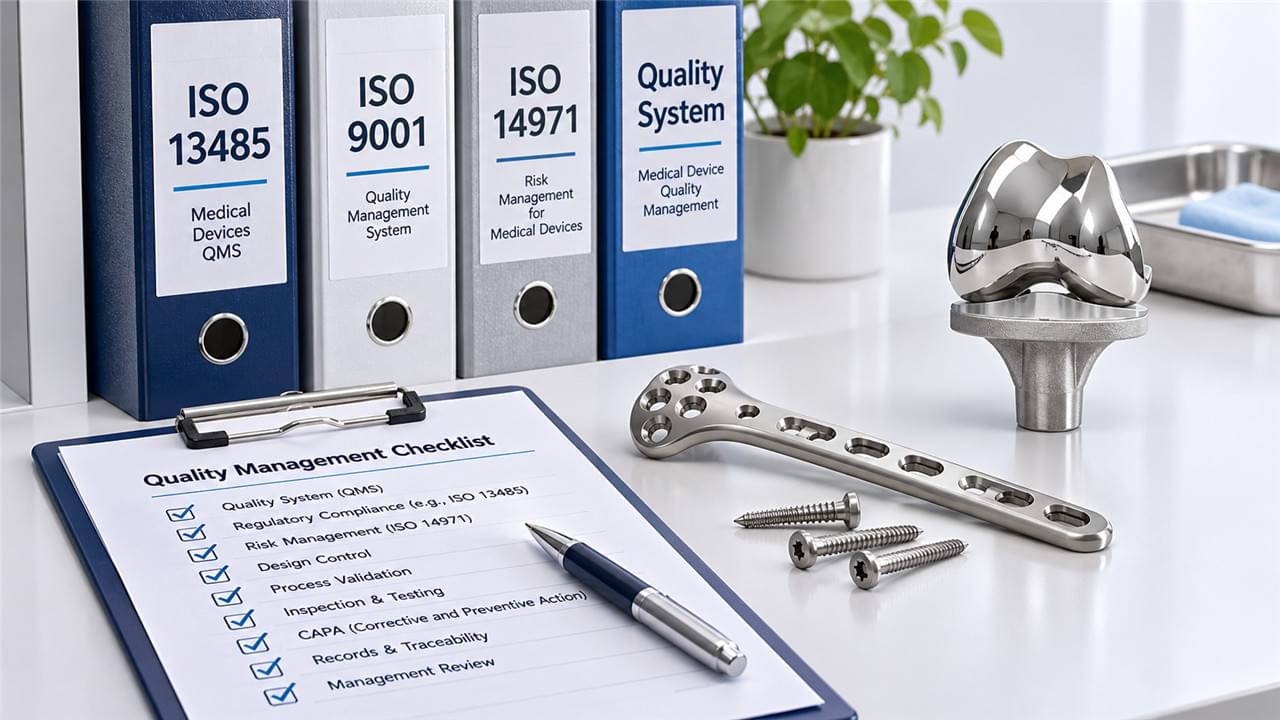
Ask any orthopedic manufacturer which standard pays the bills, and the answer is almost always ISO 13485. It’s the internationally recognized quality management system (QMS) standard for medical devices — and in practice, it’s the ticket to market access on every continent. The full family of standards lives at ISO.org, and together they govern everything from your quality manual to the titanium in a hip stem.
This guide walks through the seven standards that matter most: the QMS backbone, the risk management framework, and the material and sterilization standards that decide whether an implant survives inside a patient. It’s part of our complete series on Orthopedic Device Regulatory Compliance.
🧱 ISO 13485 Quality Management: The Backbone
What ISO 13485:2016 Actually Requires
The current ISO 13485:2016 edition organizes the QMS into ten clauses, four of which carry the real weight:
- Context and leadership (Clauses 4–5) — define your QMS scope and put management on the hook. Top management isn’t a figurehead here; the standard demands demonstrated commitment
- Planning and support (Clauses 6–7) — risk-based thinking, competence, documented information
- Operation (Clause 8) — the big one: design controls, purchasing, production, and release of products
- Performance and improvement (Clauses 9–10) — internal audits, management review, CAPA
Unlike ISO 9001, this standard emphasizes maintaining effectiveness over endlessly improving it — a deliberate choice reflecting regulatory expectations.
The ISO 13485 Certification Journey
The ISO 13485 certification process typically runs 6–18 months and follows a well-worn path: gap analysis against the standard, documentation development (quality manual, procedures, work instructions), implementation and training, then internal audits to shake out the problems before anyone official does.
Only then comes the certification audit — Stage 1 reviews documentation and readiness, Stage 2 is the on-site implementation assessment. Resolve nonconformances, and the certificate follows. Companies already running ISO 9001 usually move faster; startups building from scratch should budget the full 18 months.
⚠️ ISO 14971 Risk Management: The Safety Engine
How ISO 14971 Structures Risk Decisions
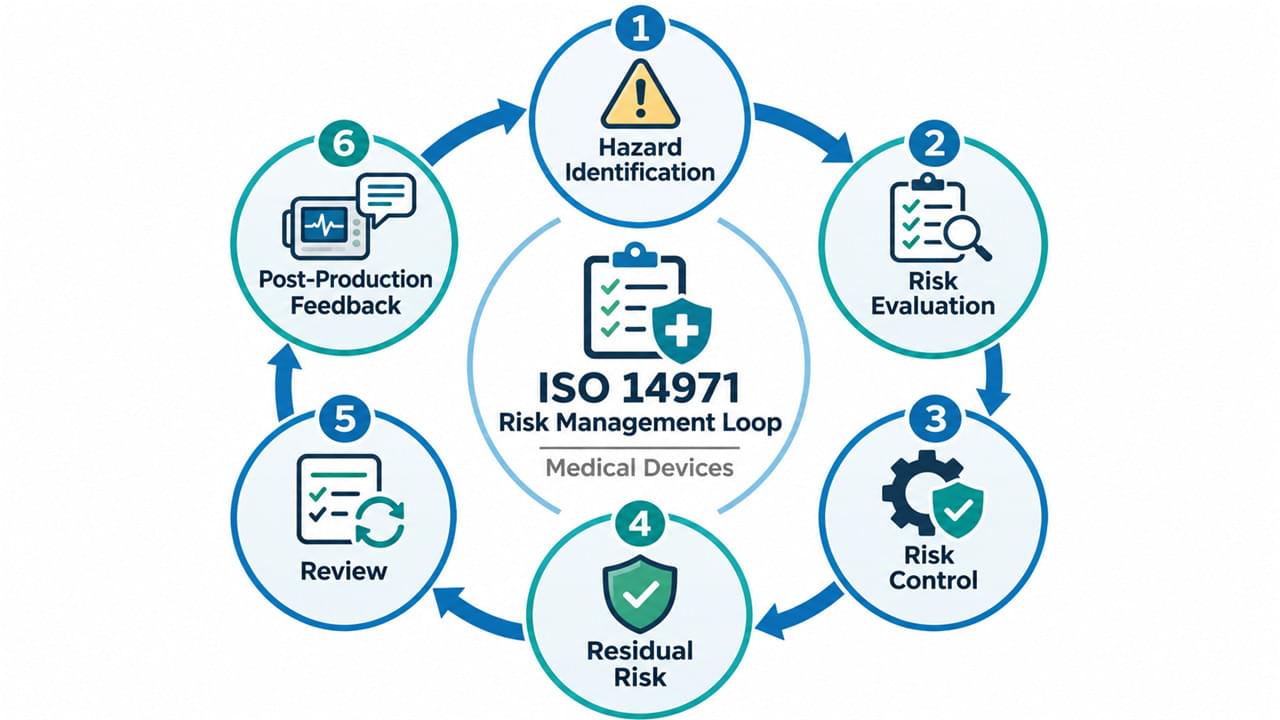
If ISO 13485 is the skeleton, ISO 14971:2019 is the nervous system. It defines a six-step risk management loop that regulators worldwide now expect on every device:
- Risk analysis — identify hazards: biological, mechanical, thermal, electrical, and the often-overlooked use errors
- Risk evaluation — estimate severity × probability, then judge against acceptability criteria
- Risk control — apply the hierarchy: safety by design first, protective measures second, labeling last
- Residual risk evaluation — confirm what’s left is acceptable
- Risk management review — before the product ships
- Production and post-production information — feed complaints, PMS data, and incidents back into the loop
The file that documents all this — the risk management file — is the first thing a Notified Body asks for. Keep it living, not archival.
🧪 Product-Specific Standards: The Material Rulebook
Implants don’t get to improvise on materials. The ISO 5832 series defines the chemistry and mechanical properties of every metal that goes inside a patient:
| Standard | Material | Where You’ll Find It |
|---|---|---|
| ISO 5832-2 | Unalloyed titanium | Bone screws, cages |
| ISO 5832-3 | Wrought Ti-6Al-4V (incl. ELI grade) | Joint replacements, trauma plates |
| ISO 5832-4 | Cast CoCrMo alloy | High-wear joint surfaces |
| ISO 5832-9 | High-nitrogen stainless steel | Trauma implants |
| ISO 5832-11 | Wrought Ti-6Al-7Nb | Lower-modulus implants |
Beyond metals: ISO 5833 governs acrylic bone cement (compressive strength, setting time, doughing time), ISO 6018 covers general implant requirements and packaging, and ISO 23317 defines calcium-phosphate bone augmentation materials like hydroxyapatite. If your supplier can’t produce ISO 5832-compliant certificates, that’s not a negotiation — it’s a disqualification.
🦠 Sterilization and Biocompatibility Standards
Radiation, Steam, and the Language of Clean
Two standards dominate sterilization. ISO 11137 covers radiation sterilization with three dose-setting methods (bioburden-based Method 1, fraction-positive Method 2, and VDmax). ISO 17665 governs moist heat — steam sterilization — covering cycle development, routine monitoring, and biological indicators.
ISO 10993 Biological Evaluation: Proving the Implant Is Safe Inside
For anything that touches tissue, ISO 10993 biological evaluation is non-negotiable. The series runs a risk-based battery: cytotoxicity (-5), implantation effects (-6), hemocompatibility (-4), sensitization and irritation (-10), systemic toxicity (-11). The smart move is a biological evaluation plan before testing — for established materials like Ti-6Al-4V with known biocompatibility profiles, literature and supplier data may justify skipping redundant tests. New materials get the full workup.
🔗 Integration with FDA QSR and EU MDR
How ISO 13485 Maps to FDA’s QSR
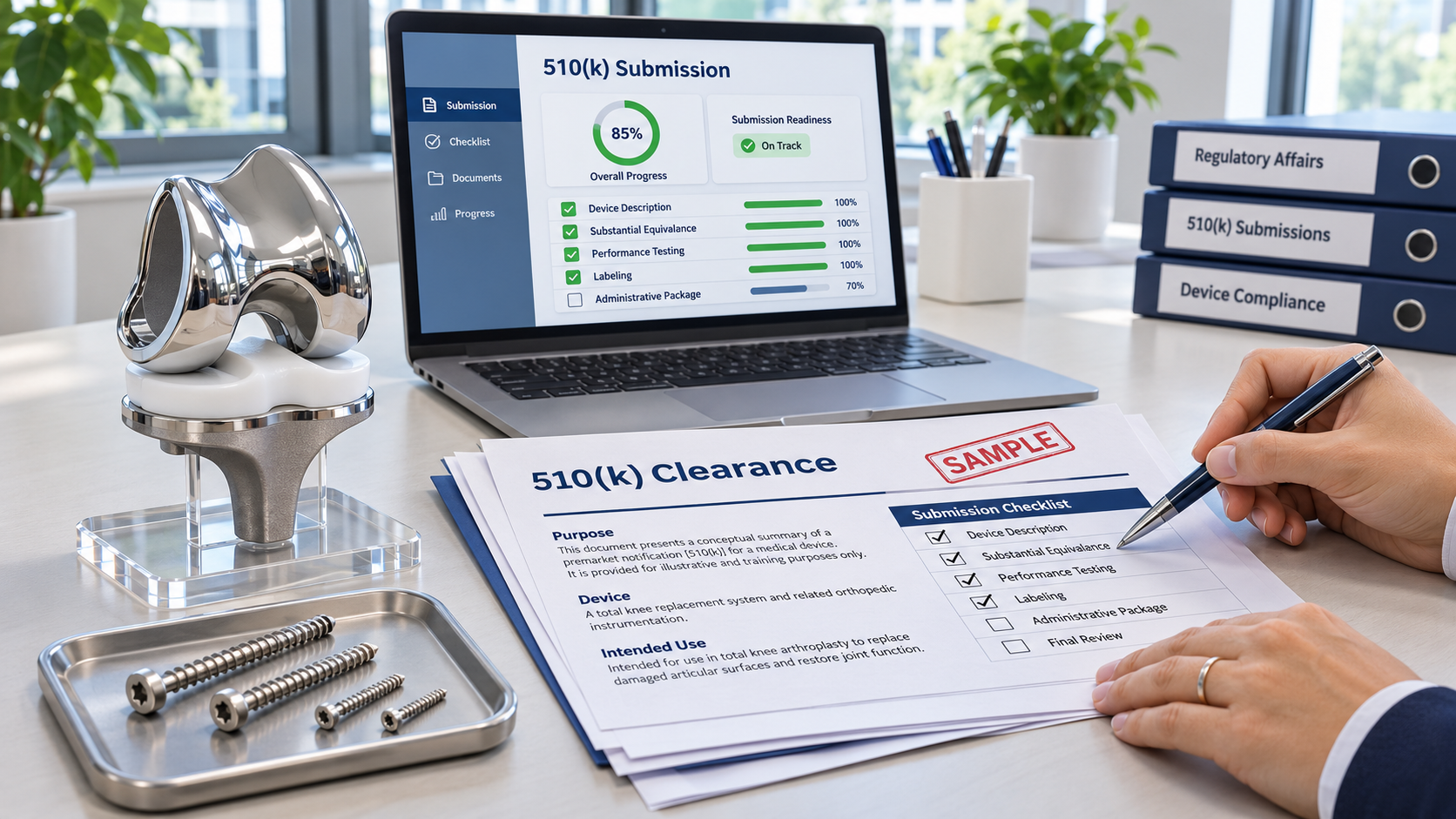
Here’s the practical reality: ISO 13485 and FDA’s Quality System Regulation (21 CFR Part 820) overlap about 90%, but the 10% matters. FDA uniquely requires the Design History File, Device Master Record, and Device History Record, plus specific management representative duties. The smart play is an integrated QMS designed once to satisfy both. For the American approval side, see our FDA 510(k) approval process guide.
EU MDR: Where ISO 13485 Becomes Law
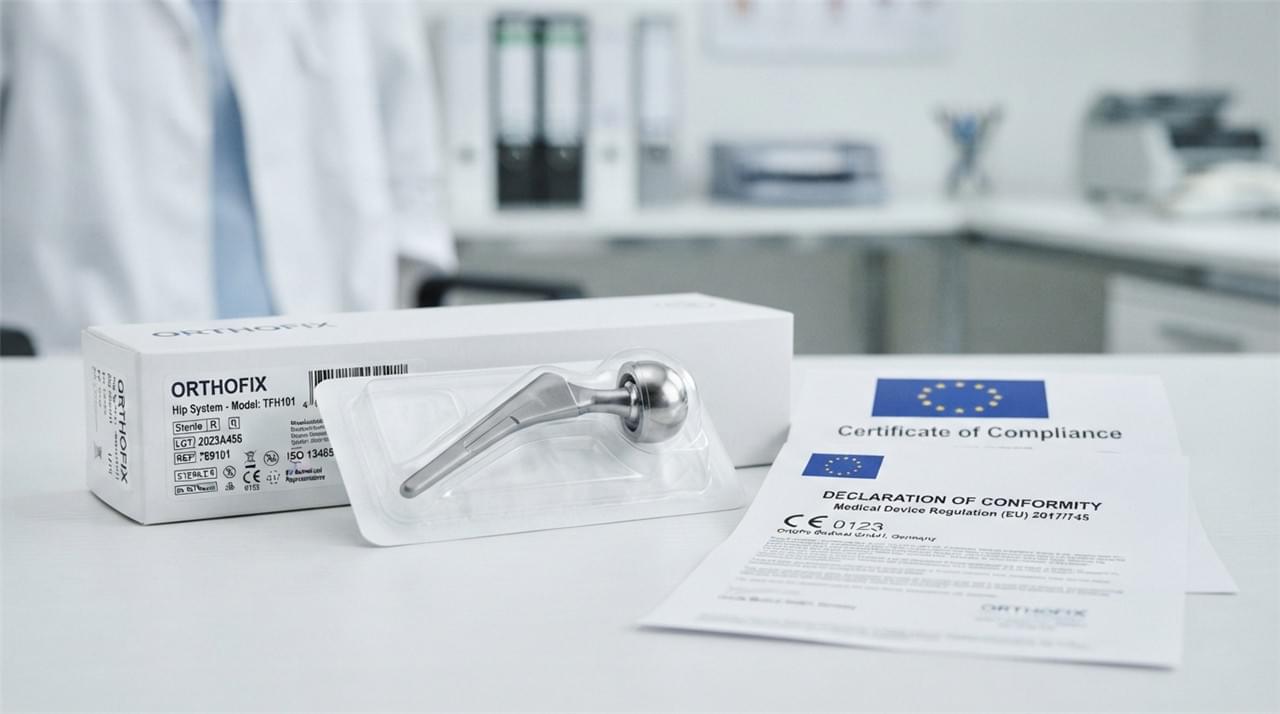
Under the EU MDR’s Annex IX, your Notified Body audits the QMS itself — and expects a risk management file per ISO 14971, a clinical evaluation report, and PMS/PMCF procedures inside your technical documentation. The full pathway is covered in our EU MDR CE marking guide. Translation: build to ISO standards and the EU framework largely builds itself.
📜 Certification Bodies and the Audit Cycle
ISO 13485 certificates come from two camps: Notified Bodies (for EU MDR compliance, designated in NANDO) and global registrars accredited by bodies like ANAB, UKAS, or DAkkS.
The audit cycle never really ends. Stage 1 checks documentation, Stage 2 verifies implementation on-site, then annual surveillance audits keep you honest — with CAPA verification always on the agenda. Every three years, a full recertification resets the clock. One warning from the field: the most common surveillance finding isn’t a broken process, it’s a process that exists on paper only. Auditors can smell the difference.

❓ Frequently Asked Questions
Q1: Is ISO 13485 certification mandatory for orthopedic device manufacturers?
Not legally everywhere — but practically, yes. The EU MDR requires Notified Body quality system certification, FDA’s QSR aligns closely with ISO 13485, and customers expect it even where regulators don’t. Without it, market access is theoretical.
Q2: How long does the ISO 13485 certification process take?
Typically 6–18 months depending on existing systems and resources. The sequence: gap analysis → documentation → training → internal audits → management review → certification audit.
Q3: What’s the difference between ISO 13485 and FDA QSR?
About 90% overlap. FDA uniquely mandates DHF, DMR, and DHR documentation, specific management representative requirements, and UDI. Most manufacturers build one integrated QMS covering both.
Q4: How often must my risk management file be updated?
Continuously. ISO 14971 requires updates on design changes, manufacturing changes, new hazards, complaints, and post-market data — with annual review at minimum through the quality system.
Q5: Do I need to test every material per ISO 10993?
No. The standard is risk-based. Established materials with documented biocompatibility may rely on literature and supplier certificates; novel materials require comprehensive testing. Document the rationale in a biological evaluation plan.
Q6: Can I use ASTM standards instead of ISO standards?
Often, yes — FDA recognizes both through its Standards Recognition Program. But the EU prefers harmonized standards (mostly ISO), and for global market access, ISO typically opens more doors. Check your target markets first.
🏁 The Bottom Line
The ISO standards family isn’t a compliance tax — it’s the operating system of a credible orthopedic device company. ISO 13485 structures how you work, ISO 14971 structures how you think about harm, and the ISO 5832 / 11137 / 17665 / 10993 series guarantees the product itself is safe, clean, and biologically compatible.
Build the QMS once, integrate FDA and EU requirements into it, and every future market entry gets cheaper. Start with our full regulatory compliance guide, then work outward through the product-specific standards as your portfolio grows.
Medical Disclaimer
The information provided is for educational purposes only and does not constitute professional certification or implementation advice. ISO standards are regularly updated, and organizations should always reference current official standards and seek professional guidance for specific implementation needs.
 English
 Arabic
 French
 German
 Italian
 Japanese
 Korean
 Portuguese
 Turkish
 Russian
 Spanish