


Managing a modern hospital or Ambulatory Surgery Center (ASC) is often a high-stakes balancing act. Between patient outcomes and shrinking budgets, the last thing you need is a fragmented supply chain causing delays in the OR. Choosing the right Orthopedic Device Supplier isn’t just about buying tools; it’s about finding a strategic partner that understands the pulse of the industry.
As the global orthopedic market climbs toward $68 billion, the complexity of sourcing high-quality implants and instruments is skyrocketing. Let’s dive into why moving toward a one-stop model is the smartest move you can make this year. 🚀
1.How a Reliable Orthopedic Device Supplier Slashes Hidden Costs
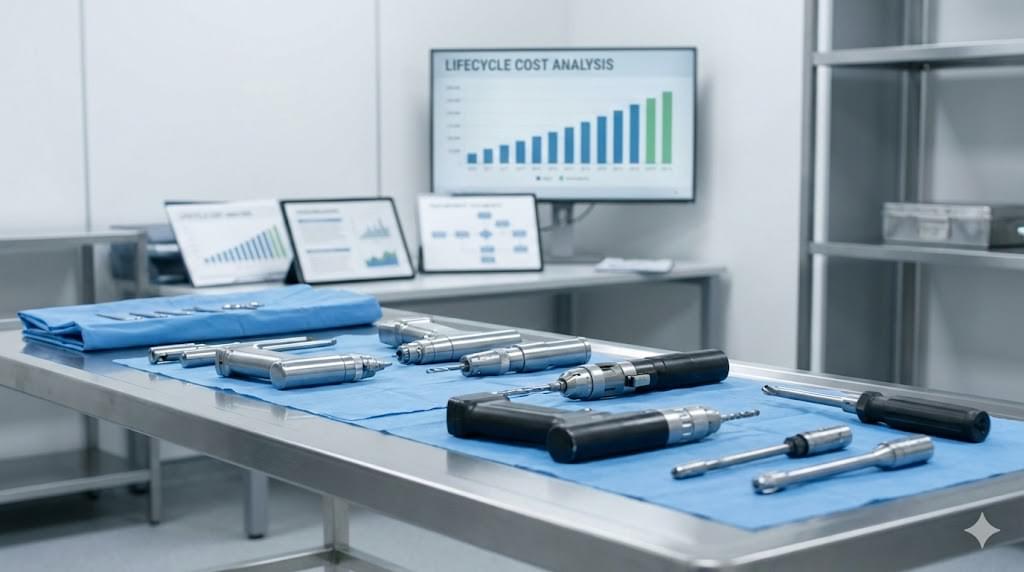
Let’s talk numbers. Procurement isn’t just the price tag on a drill; it’s the administrative hours spent vetting ten different vendors. When you consolidate your purchasing, you eliminate the “death by a thousand invoices.” 📉
A one-stop partner helps you achieve an integrated medical supply chain, reducing shipping fees and bulk-order overheads. By sourcing everything from orthopedic surgical power tools to simple disposables from a single point, you gain massive leverage in price negotiations. This transition from a “transactional” to a “strategic” relationship is exactly how top-tier hospitals stay profitable.
2.Elevate Patient Care with an Orthopedic Device Supplier
Clinical consistency is the secret sauce of a successful surgical team. Imagine a scenario where the surgeon is comfortable with the power drill, but the fixator from a different brand has a slightly different locking mechanism. That micro-delay matters. ⏱️
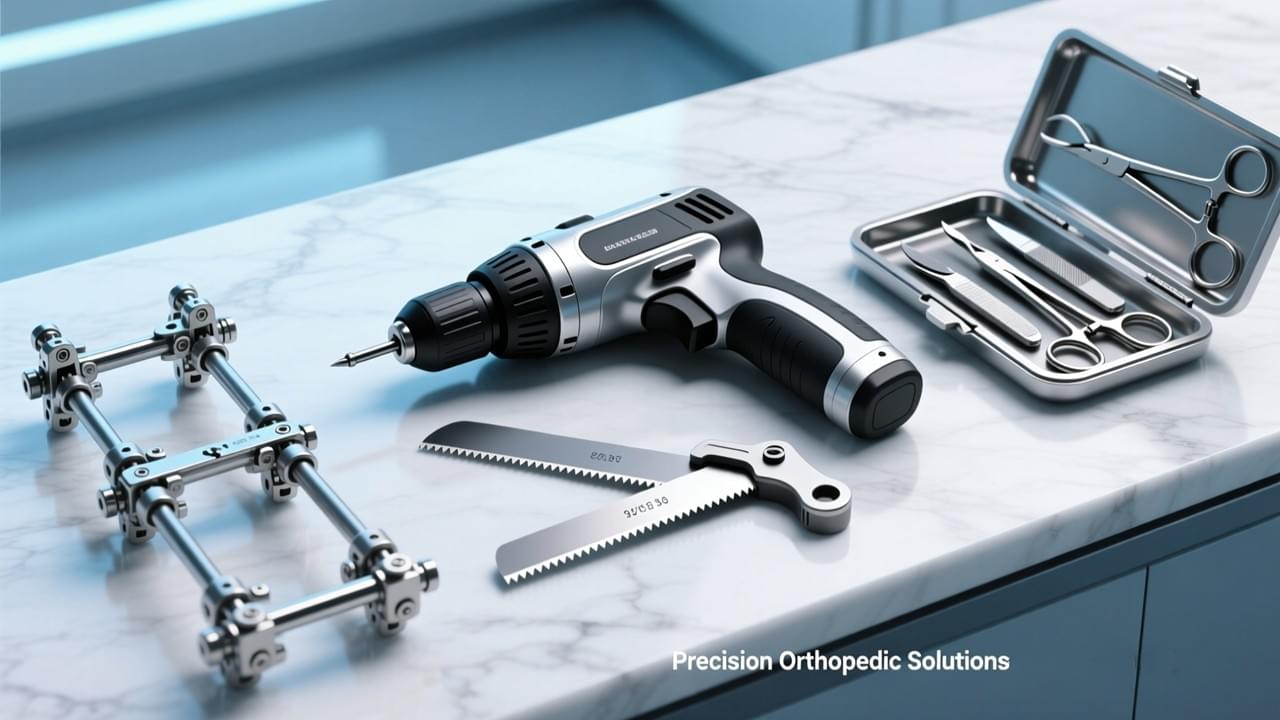
When your Orthopedic Device Supplier provides a unified ecosystem—where the external fixator manufacturer also provides the specialized instrument kits—the workflow becomes seamless. This synergy reduces the risk of “instrument incompatibility” and allows the surgical staff to focus entirely on the patient rather than troubleshooting hardware variations.
3.Is Your Orthopedic Device Supplier ISO Certified?
In the medical world, “good enough” is never enough. Quality assurance is the bedrock of procurement. You must ensure your partner adheres to global standards like ISO 13485 and CE certifications. 🛡️
A reputable Orthopedic Device Supplier like AMIS Orthopedic doesn’t just sell equipment; they provide peace of mind. With over 13 years of experience, they understand that a disposable pulse lavage system must be as sterile and reliable as the most expensive implant. Always ask for documentation; a transparent supplier is a trustworthy one.
4.Scalability with a One-Stop Orthopedic Device Supplier
One of the biggest headaches for smaller clinics is the “Minimum Order Quantity” (MOQ). Many giants in the industry won’t look at you unless you’re buying thousands of units. However, a flexible Orthopedic Device Supplier caters to both large hospital networks and boutique ASCs. 🏢
By offering low MOQs, these suppliers allow you to scale your inventory according to actual patient volume. This prevent “capital freeze,” where your budget is trapped in boxes sitting on a shelf. Whether you need a full suite of wheelchairs for a new wing or just a few specific kits, flexibility is key.
5.The Power of Integrated Logistics and Support
Think about the last time a piece of equipment failed. Did you have to call three different companies to find a technician? 📞 A one-stop model means one phone call. This level of support is vital for maintaining a high “room turnover” rate.
By partnering with an external fixator manufacturer that also manages global logistics across 50+ countries, you ensure that replacement parts arrive via door-to-door delivery without the usual customs nightmares. Real-time tracking and 24/7 customer service aren’t “perks”—they are necessities for modern healthcare.
6.Future-Proofing with Innovation
The orthopedic field is moving fast toward robotics and minimally invasive techniques. You need a supplier that isn’t stuck in 2010. Look for a partner that continuously updates their orthopedic instrument kits to reflect the latest surgical best practices. 💡
7.Building a Partnership for 2030
The goal is to build a “resilient” supply chain. By the end of this decade, the most successful healthcare providers will be those who simplified their operations. Your Orthopedic Device Supplier should be a bridge to that future, helping you navigate market shifts while maintaining the highest standards of care. 🤝
Ready to simplify your surgical supply chain? Don’t let fragmented procurement slow you down. Explore the comprehensive catalog at AMIS Orthopedic today and see how 13 years of manufacturing expertise can transform your facility’s efficiency.

 English
 Arabic
 French
 German
 Italian
 Japanese
 Korean
 Portuguese
 Turkish
 Russian
 Spanish